
Meet CoDeCo Member Kim Bache
August 5, 2026
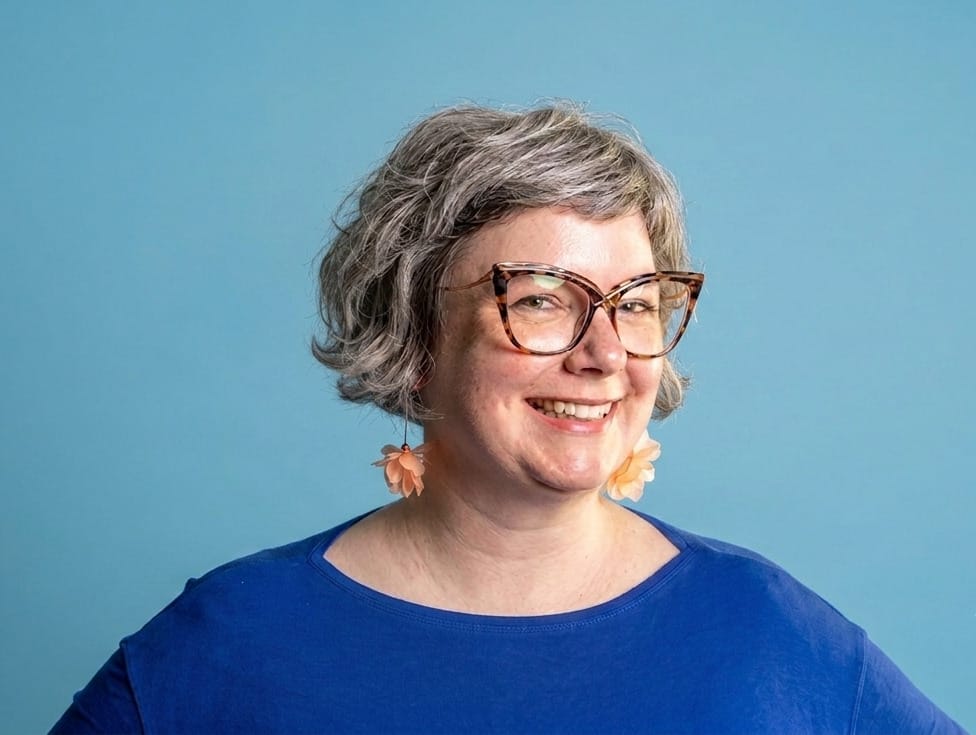
Kim Bache is a Portland-based community organizer, facilitator, and crystal merchant who believes that becoming who you already are is the most powerful journey there is.
Connect with Kim
How did you get involved with CoDesign Collaborative?
A couple of years ago, I found myself wanting to lean into my interests more and remembered how much I love all things design. I searched “design in Portland” and discovered the Design Museum Everywhere Portland chapter — now CoDesign Collaborative. I deeply appreciated discovering that CoDesign Collaborative’s mission goes far beyond design as a profession — it’s about design as a force for social change, community, equity, and the environment. And their genuine commitment to accessibility and inclusion made clear that this community truly is for everyone passionate about design, not just credentialed designers.
Still, at my first event I was a little nervous, thinking — I’m not a designer, do I belong here? When I voiced that, a little shakily, to the program director at the time, she looked at me and said: “You design your life — so you are a designer.” I was hooked. I love being a member, attending chapter events, reading Unfold, their magazine, and taking advantage of everything CoDesign Collaborative offers.
How do you see the future of design in shaping community?
What a great question, as design absolutely shapes community. I recently attended CoDesign Collaborative’s excellent LinkedIn Live panel on health and human-centered design — a subject I think about deeply. As someone with lived experience navigating mental health challenges, I find myself often wondering how the design of healthcare spaces impacts our wellbeing, particularly in behavioral health settings. How do we promote safety, belonging, and humanity through design?
I’ve been admitted to behavioral health wards both in the United States and in Dublin, Ireland, and the differences were striking. In the US, I’ve encountered glass partitions at nurses’ stations — a design choice that, to me, communicates a significant power differential. It signals distrust, that patients are dangerous, and that staff need protection from us. Is that the message we want to send to people at their most vulnerable?
In Dublin, there were no glass partitions. The difference in atmosphere was palpable. Design shapes how people feel about themselves and each other. In behavioral health spaces especially, that matters tremendously. I believe human-centered design has the power to transform not just how care is delivered, but how patients experience their own humanity within it. My hope is that the future of health design is human and patient-centered — and based on what I heard in the LinkedIn Live panel discussion, while there’s always more we can do, it is happening. And that is great news.
Do you have a favorite tech-hack or life-kit advice?
While I’m naturally analog and enjoy a good planner and pen, I’ve moved my to-do list to my iPhone using Things 3. It’s a task management app that is beautifully simple and streamlined with no extra visual clutter. My brain loves it — and I’m getting things done even more than before! Don’t worry, paper, I still heart you.
Become a member and participate in online events, local meetups in Boston and Portland, and receive Unfold magazine to your doorstep.
codesigncollaborative.org/support
888-287-0167