
Field Report
From Forest to Fabrication — Designing a More Resilient Wood Economy
August 14, 2026
Zena Forest Products and Timberlab | Portland, OR
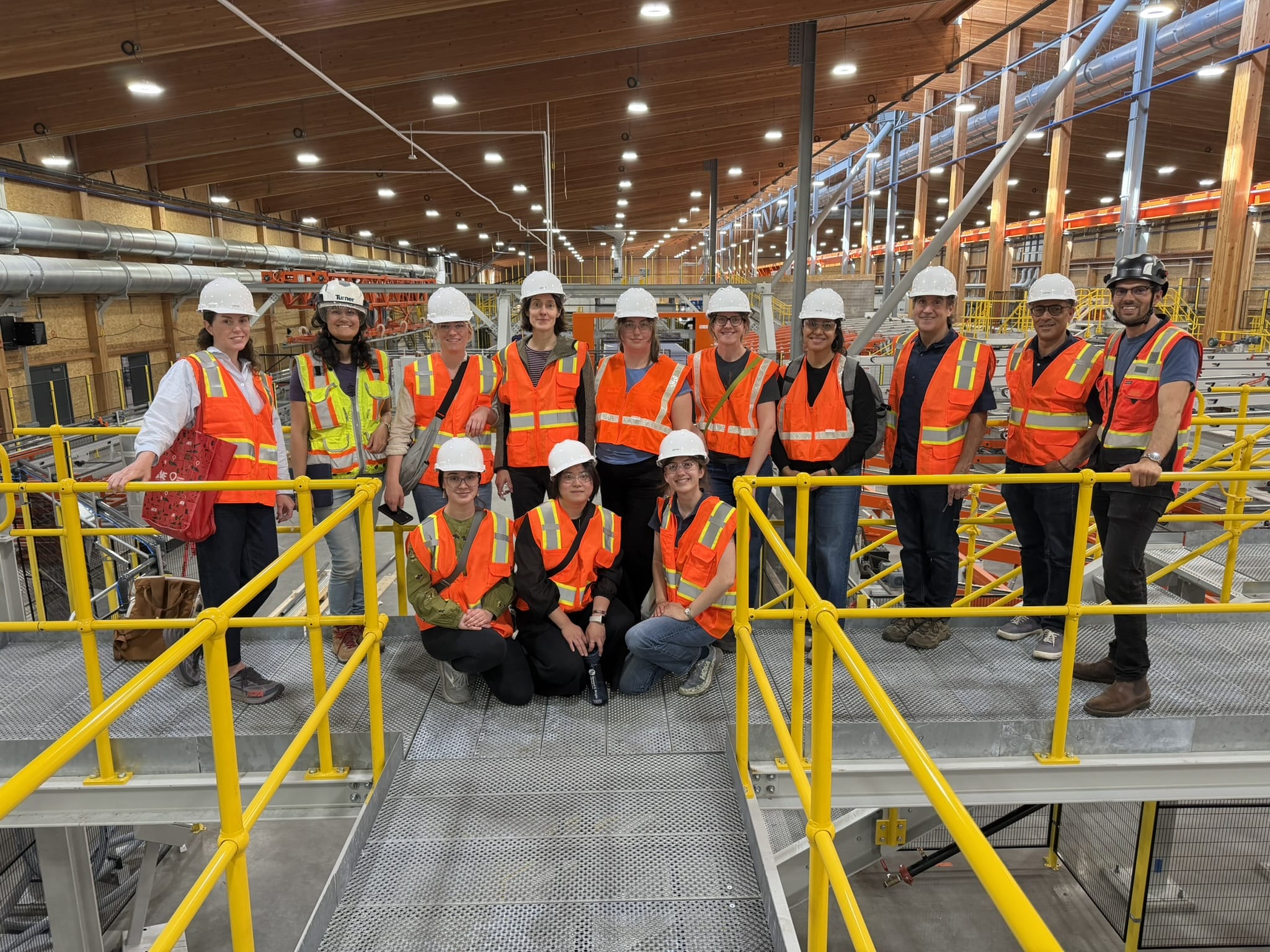
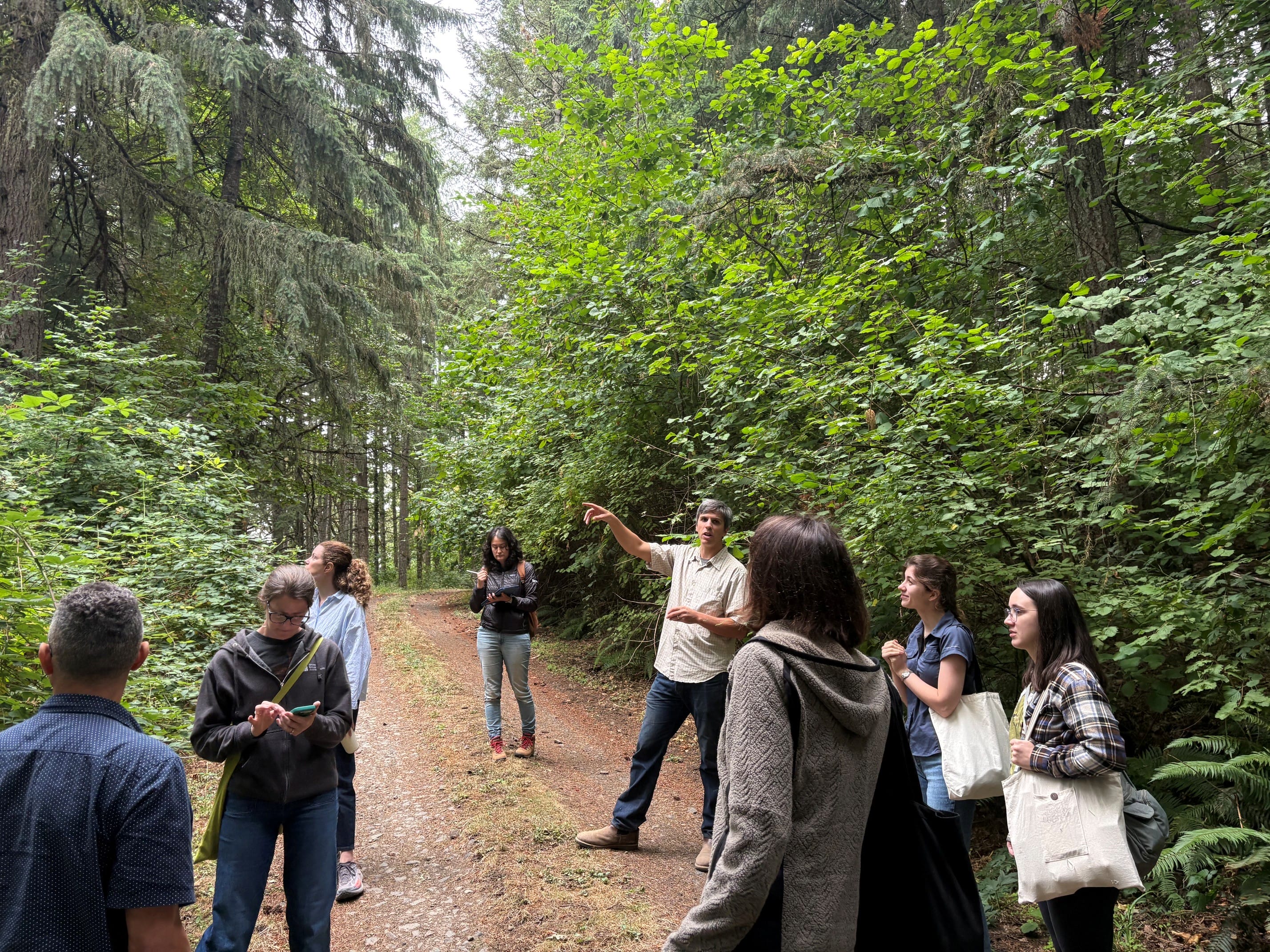
What does a sustainable building material look like before it becomes part of a building? CoDesign Collaborative members had an opportunity to explore that question from two very different perspectives during a day-long Forest to Fabrication tour organized by Scott Edwards Architecture. The tour took participants from the forests and mill of Zena Forest Products in Oregon’s Eola Hills to Timberlab’s Independence Hall CLT manufacturing facility in Millersburg. Together, the two stops offered a compelling look at how sustainable forest management, thoughtful material use, advanced manufacturing, and design can reinforce one another.
At Zena Forest Products, participants saw firsthand that producing sustainable wood products begins with the health of the forest itself. Zena manages a 1,300-acre forest with an emphasis on maintaining a diverse, mixed-age and mixed-species ecosystem while balancing harvesting with continued growth and regeneration. Rather than viewing the forest simply as a source of raw material, the approach demonstrates how forestry can support biodiversity, carbon storage, watershed health, resilience, and a viable local business at the same time.
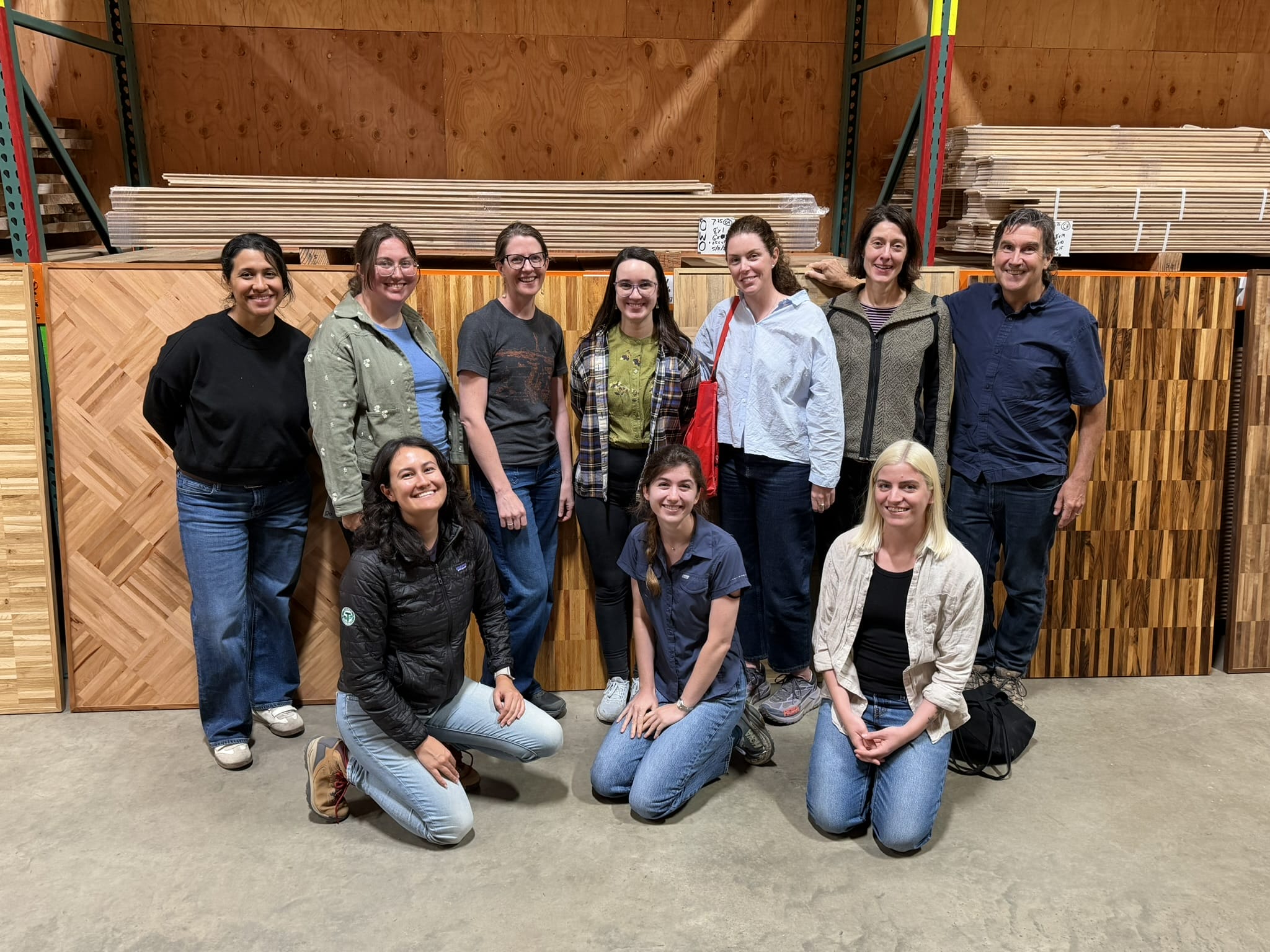
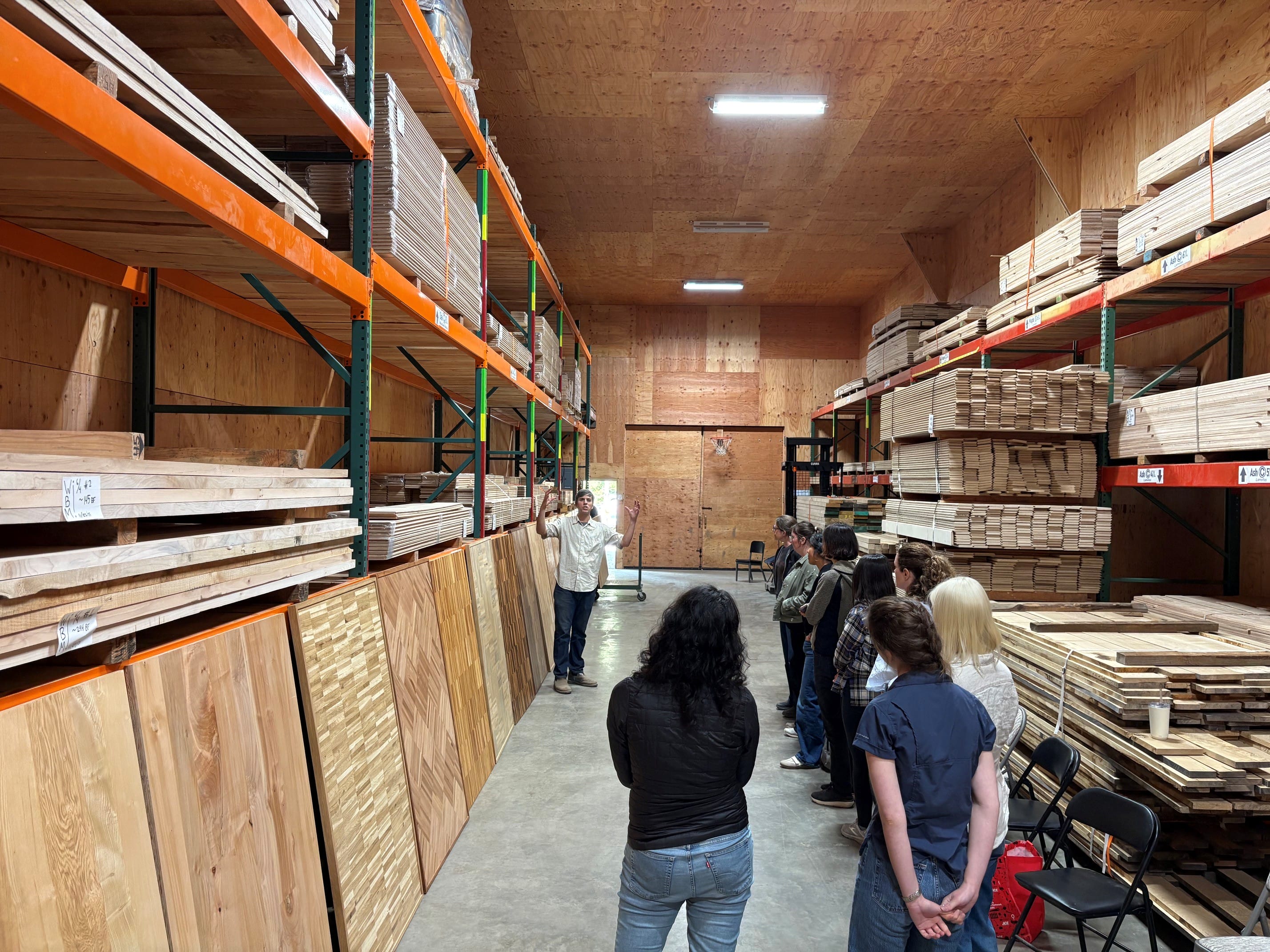
That philosophy continues into Zena’s finished products. Its innovative EdgeGrain™ flooring makes use of material left from manufacturing wide-plank flooring and from small-diameter trees, turning what might otherwise be waste into a durable architectural finish made from locally sourced Oregon hardwood. Visitors to the renovated Portland International Airport can see the results at a remarkable scale: the main terminal features approximately 57,000 square feet of Zena EdgeGrain Oregon White Oak flooring. The lesson was clear, responsible material use is not simply about using less. It can also mean finding greater value in the resources we already harvest and creating beautiful products designed for a long life.
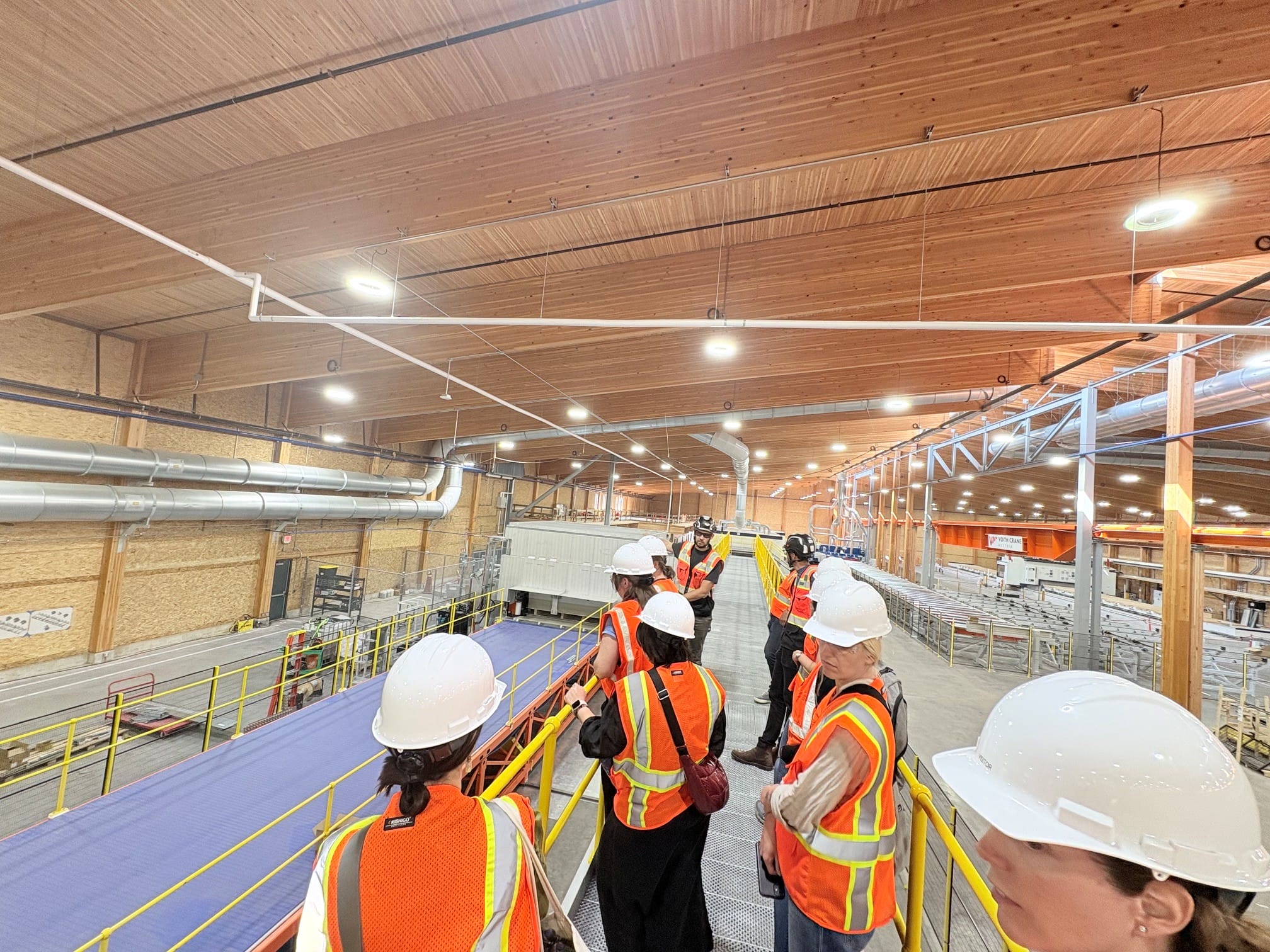
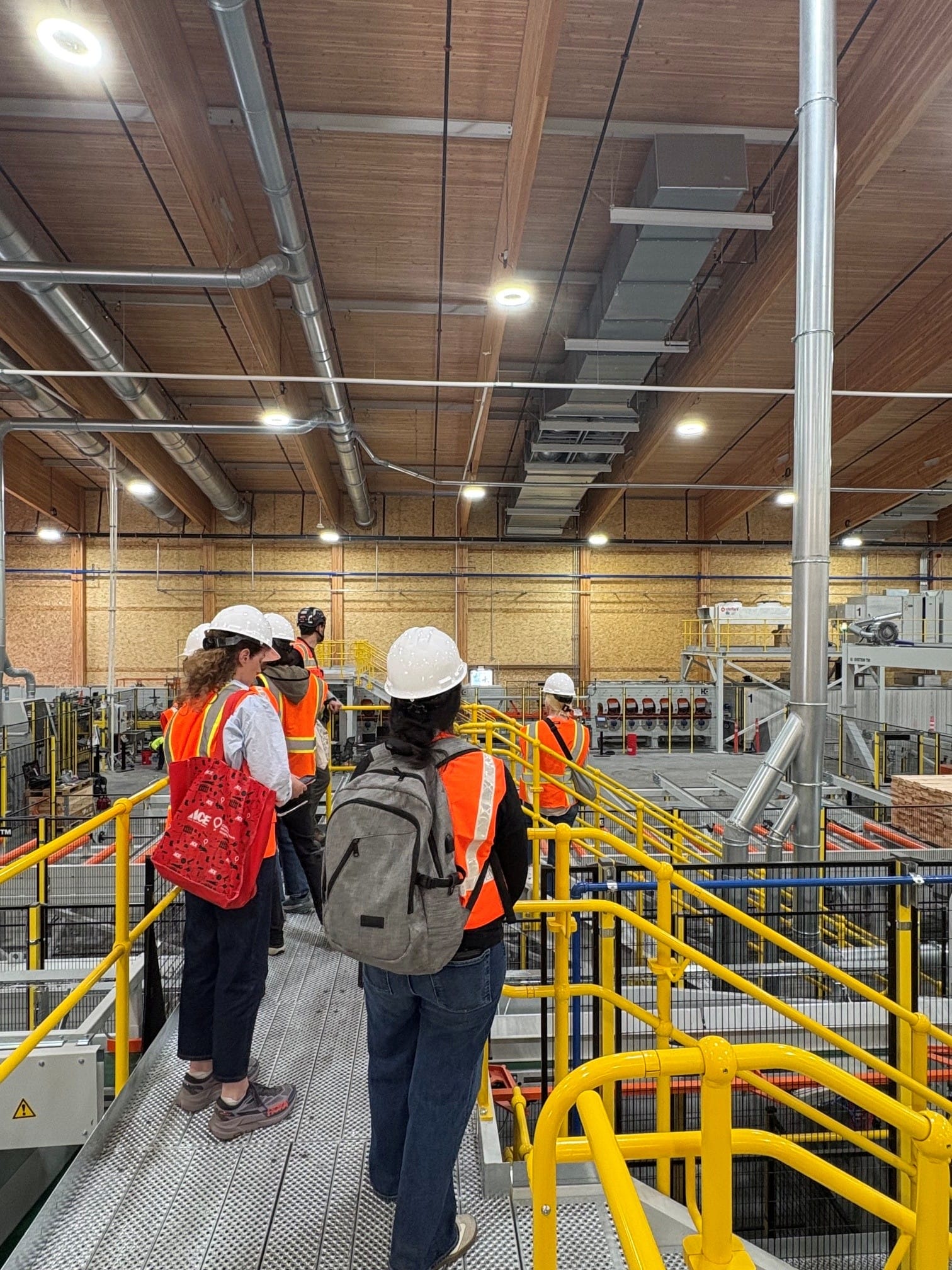
The second stop moved from the forest to the leading edge of wood manufacturing. Timberlab’s approximately 190,000-square-foot Independence Hall facility will soon manufacture cross-laminated timber (CLT), a structural mass-timber product that can provide a lower-carbon alternative to conventional structural materials. Advanced automation, including CNC machinery and a radio-frequency press, is designed to improve the precision and efficiency of CLT production.
The scale and sophistication of the plant illustrated another side of sustainable design: technology can help make efficient use of renewable resources while reducing waste, controlling quality, and making lower-carbon building systems more practical and cost competitive. At the same time, investment in domestic mass-timber manufacturing can strengthen an enduring regional economy connecting forests, mills, manufacturing, design, and construction. Timberlab projects that the facility will ultimately support approximately 100 living-wage manufacturing jobs.
Taken together, the two tours provided a useful reminder that material sustainability extends well beyond the attributes of a finished product. It begins with how landscapes are managed, continues through how much value we extract from each harvested resource, and extends to how materials are manufactured, specified, assembled, maintained, and ultimately used.
For designers across disciplines, the broader takeaway may be equally important: good design can create value at every link in the chain. By connecting ecological stewardship, material efficiency, technological innovation, craftsmanship, and local economic vitality, we can design not only better products and buildings, but more resilient systems for producing them.
Special thanks to Zena Forest Products, Timberlab, and Scott Edwards Architecture for sharing this experience with the CoDesign Collaborative community. We are grateful to partner with individuals and firms centering social impact in design.
If you are interested in partnering on a Field Trip or a workshop in your space, send us a note at info@codesigncollaborative.org. We look forward to collaborating with you!
—
Alan Scott, FAIA, LEED FELLOW, LEED AP, CEM, WELL AP
Director of Sustainability, Building Science Solutions, Intertek
Board Member, CoDesign Collaborative