
FROM THE EDITOR
By Rania Adwan
A Sufi cleric once described American exceptionalism as a burden of responsibility. Freedom, he argued, is meaningless if it serves only ourselves. Whatever privileges, protections, or liberties we possess ought to be used in service of something greater. I wholeheartedly agree. Exceptionalism, American or otherwise, is meaningless without the weight of what you owe. Dissent is one expression of that responsibility.
For a decade, I’d made it my day job to disrupt the system, bringing strategic design to police reform. I saw firsthand what bastardized power looks like, how the cops are often the least of our problems, and that trauma – that agitation that gets read as difficult, the shutdown that’s misconstrued as being uncooperative – is overlooked information. By the time I’d been handed the guest editor reins, that lens had widened; we were being ICE’d here in the US and genocided in Palestine, Sudan, and Congo.
The pain is personal, and it is universal. Nothing here is new, not the struggle, not even the tools. Fascism might be new to some, but for others, they have always been its target. And, once you know, you see it everywhere.
To echo a friend and another guest editor, writing about a different topic, J.R. Uretsky: “Everything is designed, and therefore everything can be dismantled and redesigned.”
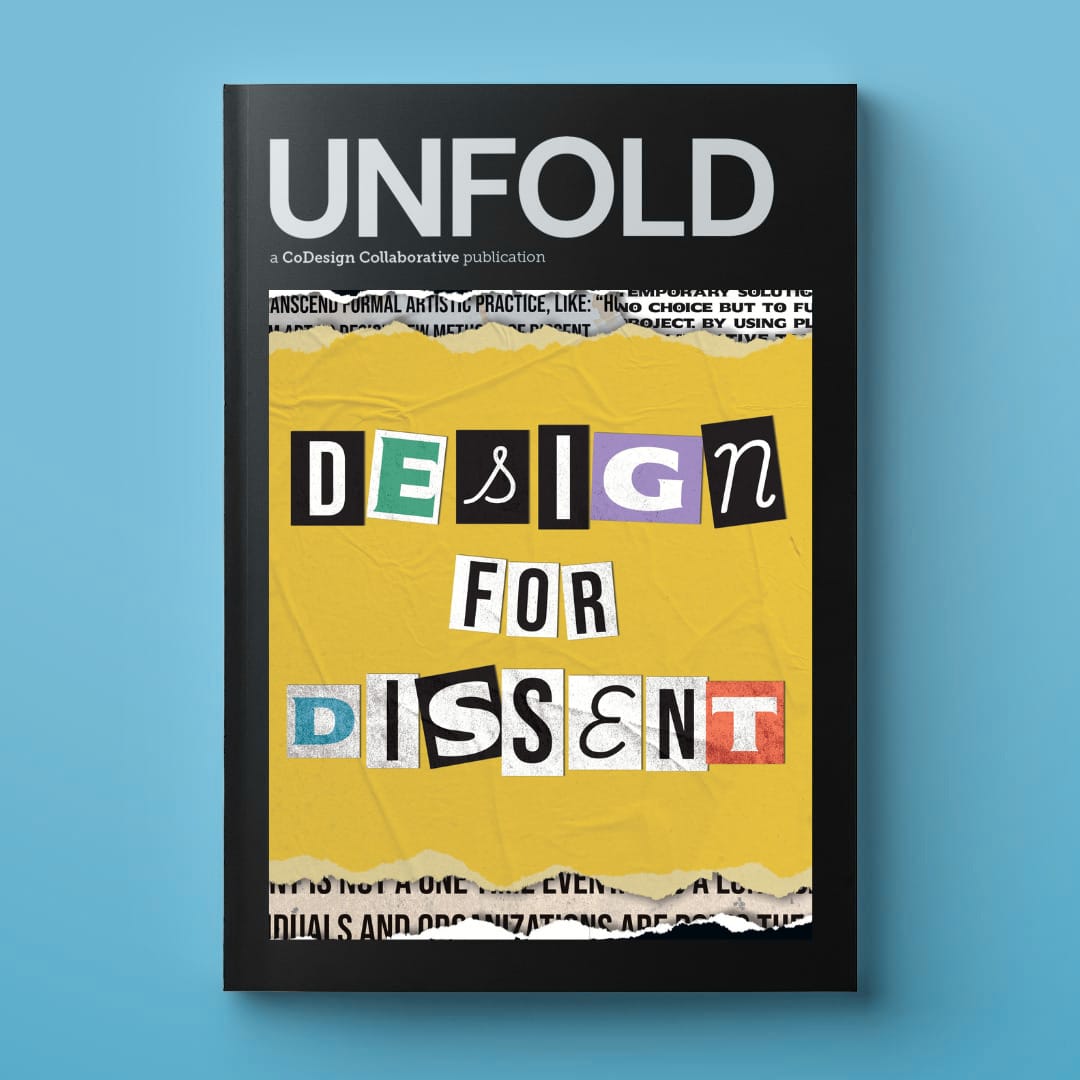
Design can and should be a revolutionary act.
This issue is an atlas of that force, charting where it’s been, what it’s building, and where it could go. I’ve tried to build this collection to meet you wherever you are on the resistance spectrum. If you’re new to the fight, I hope it pushes you forward. If you’ve been here a while, I hope it honors what you already found to be true. Wherever you are, do something. Then do more.
The atlas I made for you is also the one I made for myself. Here’s what I mean.
For so many reasons, I find it impossible not to see injustice everywhere. I also found the weirdest things to puncture that weight and keep going. I hadn’t realized, for example, that I was consuming dissent in art and design all along. My partner introduced me to Caroline Casey’s Visionary Activist, a gloriously wacky show on Pacifica Radio’s KPFA, where current events collide with history, music, astrology, and the most absurd sound effects. The Paul Robeson episode was the lightbulb moment. And the light stayed on: dissent has a lineage; I just hadn’t been paying attention.


Listen to a conversation with Rania Adwan & Sabiha Basrai from The Dissent Issue
I wanted to anchor this issue in what came before. Anna Johannes traces the Capitol Crawl, the 1990 disability rights protest, and Rae Alexandra writes about women too often erased from public memory. Between them, they show us just some of the shoulders we’re standing on.
I’ve struggled with what it means to take on the system. Is it enough that we demonstrate No Kings if we still have Amazon subscriptions? Are we better off for boycotting? Can you resist the system while still participating in it? If you aren’t totally removing yourself from it, can you rebel? Jocelyn Rice and Jacquelyn Ogorchukwu Iyamah offer an answer, building alternatives in fashion and architecture, respectively. While Eden Elam continues the line of thinking with her personal take from D.C., Zoe Donaldson extends the logic, bringing it back to workplace systems and everyday decisions.
Community as healing was confoundingly vague to me. What does it mean, and where do you even begin? I take out my frustration and find some rest weeding at my neighborhood community garden. It was there I was handed a zine about the Diggers, a nearly 400-year-old English movement that believed land and food should be shared, not owned. The idea traveled far and wide, from Nicaragua’s fields where workers sang translations of a folksong about the group, to Northern California’s post-war subculture and my little garden. Forced to put down my phone and focus on the foliage. The revolution, it turns out, is in the soil.
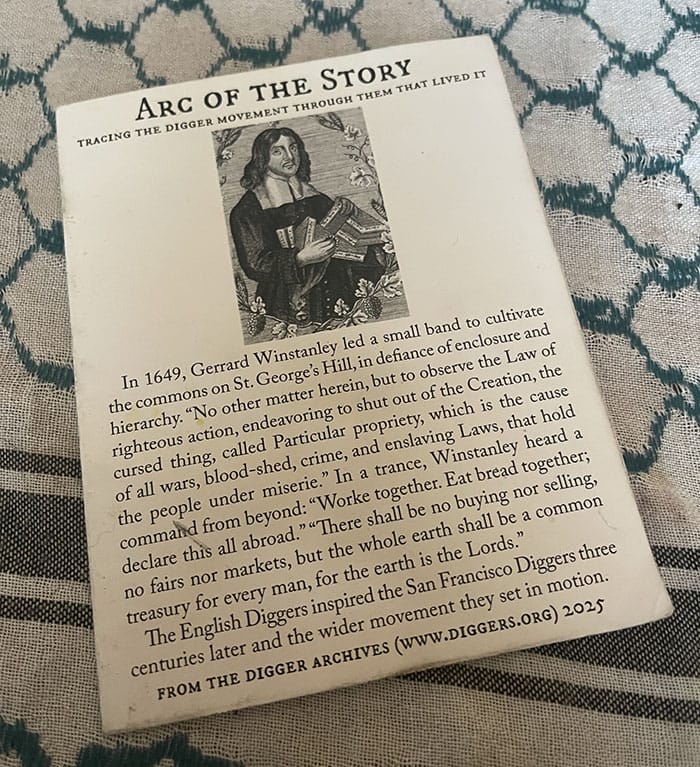
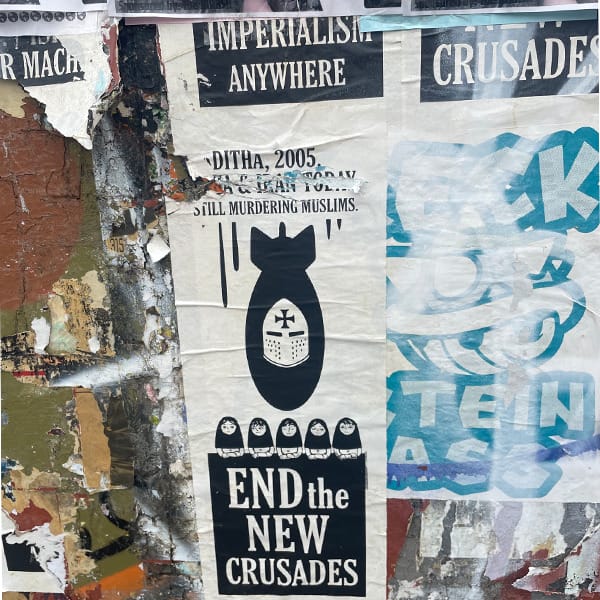
Tyler Galloway and Melissa Casburn, in their respective pieces, take on tools that have served the fight before, think zines and posters, hand-pressed and hand-passed forms of communication: part how-to, part origin story, part refusal to accept the status quo.
Early in this process, Christian Howard, an interdisciplinary artist, game designer, and meditation teacher, pushed me toward something I’d been neglecting: dissent through play, through joy, through lighter energy. How grateful I was, then, when Ryan Swanson and Maeghann Coleman from The Urban Conga answered the open call. In their piece, they demonstrate the same principle of play as both a tool and a non-negotiable in co-designing public spaces.
The ‘winners,’ they tell us, (re)write history. I learned from Jennifer Rittner, another former guest editor and CoDesign Collaborative council member, that archiving is itself an act of resistance. The system counts on erasure. Our stories, told and preserved, are the counter. Corrina Espinosa and Molly Valentine Dierks are using augmented reality to reinstate public art removed and share their work with us here.
Sustainability is my hardest lesson. Grief and rage take turns; one exhausts me into the arms of the next, and apathy awaits when both are done with me. The system is counting on that sequence. Exhaustion is compliance-by design! We are overexposed and overwrought, and in Rachael Dietkus’s piece, we learn about the cost of care on social workers and what it means to hold others while being stretched thin yourself. In turn, Tracy Swyst offers ways to catch your breath before returning to the fray.
Dissent is embodied; Dr. Tyfahra Milele reminds us that the body often resists before language arrives. Trauma has its own intelligence. At its most primal, dissent is simply the body saying no before we have words for it.
This issue is what I found when I went looking for myself. The contributors pushed my thinking and understanding even further than I could have on my own. Let this collection make the invisible visible, the distant personal, and the personal urgent.
Exceptionalism without responsibility is just privilege. This is a call to arms, and it isn’t always polite. Because the question isn’t whether we’re implicated, but what we’re going to do about it.
