
Results for: Category: Uncategorized
-
Community • Issue 018
Designed for Harm
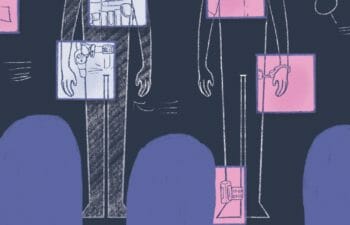
The conversation about policing is a Molotov cocktail of trauma, bias, propaganda, and cognitive dissonance. Many Americans are raised to think of the police, and by extension policing, as a mechanism to protect and serve. Yet, this stands in stark contrast to the experiences of those who interact with one of the nation’s largest and most dominant civil services as a purveyor of fear and dominance.
-
Community • Issue 018
Futures of Policing
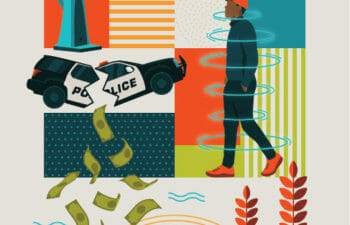
In the future, police could use remote technology to peacefully disarm suspects without ever firing a shot. Or perhaps police will use lasers to slice off the legs of even nonviolent offenders. In the future, police forces may expand, but their demographics could reflect the multiculturality of a minority-white America. Or maybe drones will replace police altogether. If they don’t, community gardens potentially will.
-
Community • Issue 017
Smarter Healthcare: Expanding Patient Engagement
The quest to improve American healthcare has traditionally focused on finding new drugs, producing more powerful diagnostic tools, and building medical centers with ever-expanding footprints. Despite these investments, costing 5 percent of GDP in 1960 and over 18 percent of GDP in 2018, the U.S. healthcare system is fundamentally broken, if not unsustainable.

-
Community • Issue 017
Modern Midwifery: Designing Equitable Birthing Care
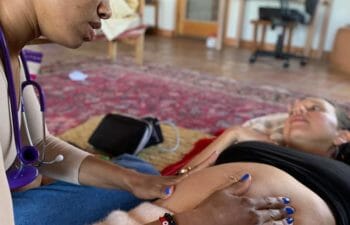
An Interview with Tiffany Townsend, Certified Professional Midwife, Doula, and Certified Lactation Counselor
-
Community • Issue 017
Community as Medicine: Re-Designing Healthcare
I’m Dr. Elizabeth Markle. I’m a psychologist, an innovator and entrepreneur in the fields of human health and well-being, a scholar of Intentional Community (literally, community shaped by design), and Co-Founder of Open Source Wellness.

-
Community • Issue 017
How will COVID-19 Change Healthcare Design?
Globally, the COVID-19 pandemic has tested the overall resilience of our health system infrastructure to cope with increased demand. It has also brought the importance of design and the built environment to the forefront when considering emergency preparedness and infection control.