
THE PALETTE OF DISSENT
An Introduction to Emergent Dynamics and the Right to One’s Own Reality
By Tyfahra Singleton Milele, PhD
The Root — Orchard Avenue
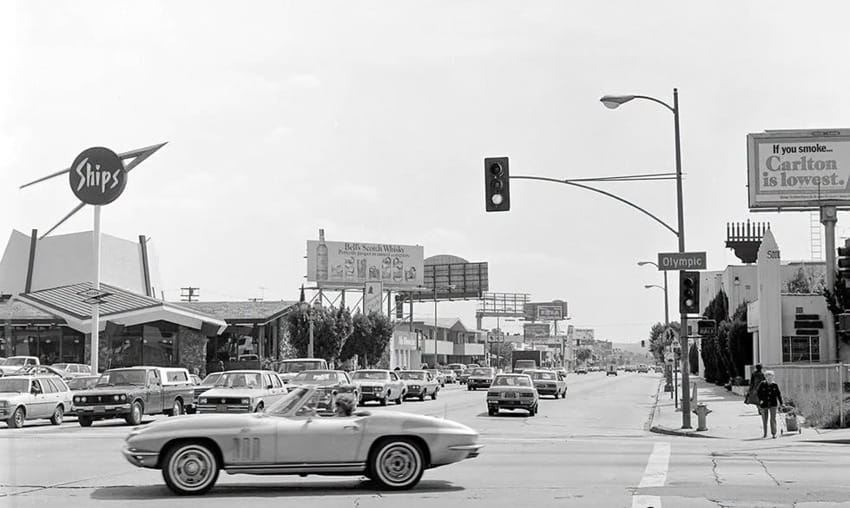
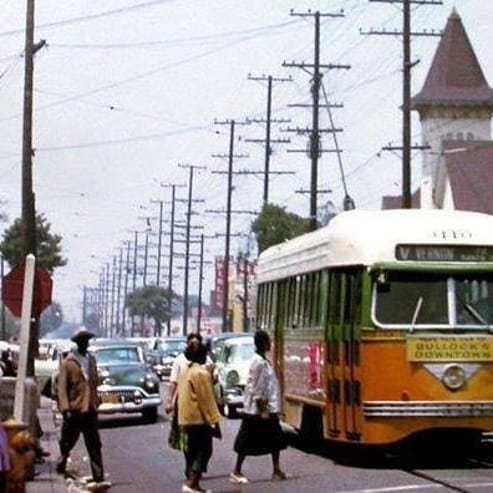
For most people a ‘State of Emergency’ is a headline, a breaking news banner or a siren in the distance. But I learned what it meant on a front yard in South Central Los Angeles. It didn’t come from a screen; it came from my grandmother, Lula Fae.
Eula Mae Love was our next-door neighbor, not an abstract victim in a sociology textbook; she was my grandmother’s friend. In our house, ‘They killed Mrs. Love’ was a refrain that settled into my bones long before I knew the details.


It started with a gas bill for twenty-two dollars. It ended with a thirty-nine-year-old widow, mourning a husband lost to sickle cell three weeks earlier, shot eight times at point-blank range in her own yard while her daughters were inside.
I was too young to see the shots, but I wasn’t too young to witness the aftermath in the women who raised me. I saw how the neighborhood lost more than a neighbor; we lost the illusion that the system was designed to see the human being in the center of the storm.
For me, safety was never a policy or a protocol. I grew up knowing it was a condition: a fragile state of being that could be shattered in an instant by the very people paid to protect it. When that condition is violated, the body doesn’t wait for a political theory to react. It dissents.
I spent decades trying to understand that fracture. I wrote my dissertation on the intersection of jazz and trauma, anchoring my work in Walter Benjamin’s observation that for the oppressed, the ‘state of emergency’ is not the exception, but the rule.
I argued then that trauma is, at its heart, an epistemic crisis: when what you know to be true is so horrific it sets you apart from everyone who refuses to see it. I looked for the ‘music’ in the tragedy, searching for a way to testify to a ‘State of Emergency’ that the history books seemed determined to forget.
The Shattering: The Myth of ‘Two Sides’
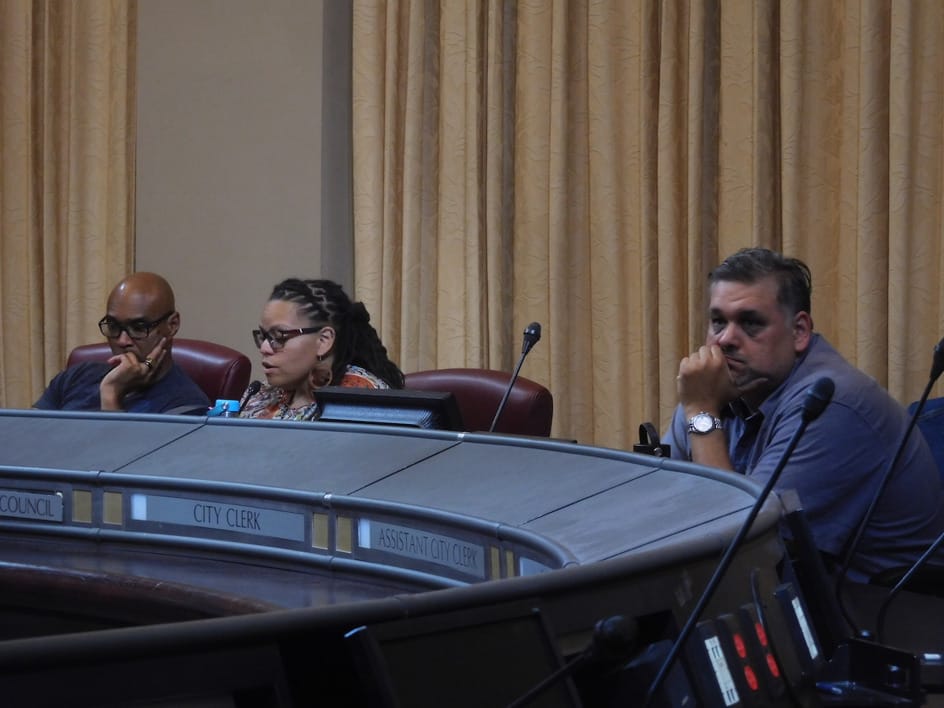
In 2020, I entered a Zoom boardroom to join the Oakland Police Commission. I wanted praxis, not just theory. I wanted to take everything I knew about the ‘State of Emergency’ and put it to work in a system that seemed to be visibly cracking.
I expected conflict. I expected a fight. But I didn’t expect a shattering.
We learn to see issues like these through a binary lens: Us versus Them. Pro-police versus Anti-police. Reformer versus Abolitionist. We treat conflict like a tug-of-war where one side eventually wins as the other collapses.
But inside the Commission, the ‘Two Sides’ myth died a quick, loud death.
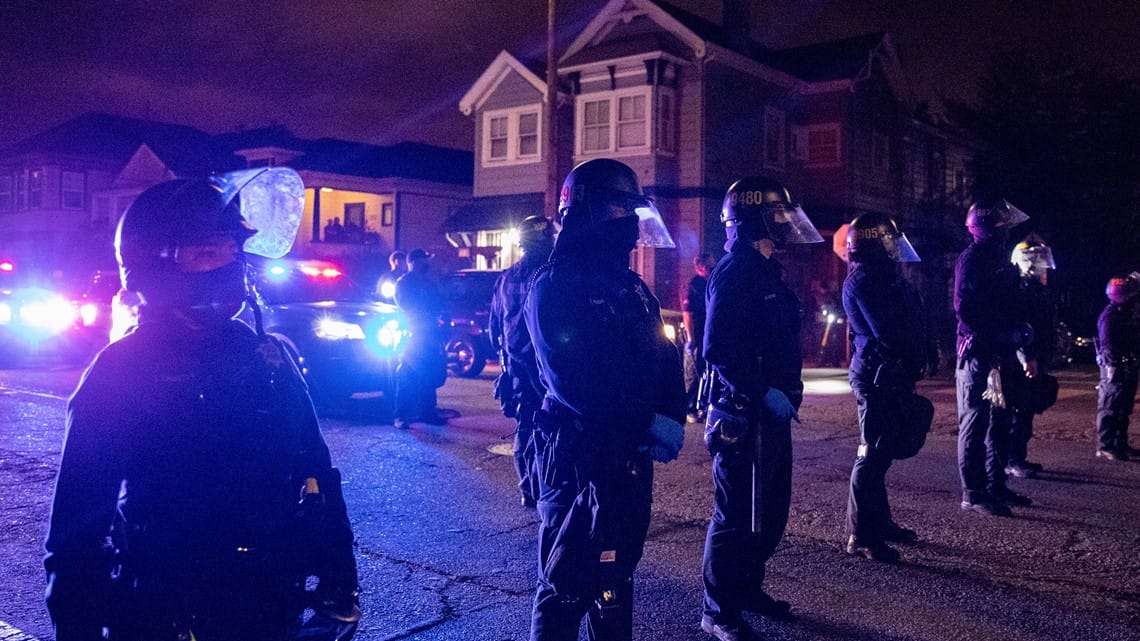
I sat in rooms where, while everyone looked at the exact same set of facts, no one inhabited the same reality. I saw activists driven by the green pulse of community care. I saw officers anchored in the blue steadying of order. I saw elected officials moving with the orange heat of strategic reform. And beneath it all, I felt the beige tremor of survival, the same one I’d heard in my grandmother’s voice when she talked about Mrs. Love.
It wasn’t a debate; it was a collision of frequencies.
The activists weren’t just ‘angry’; they were operating from a paradigm where safety required the total dismantling of the existing order. The officers weren’t ‘defensive’; they were protecting a worldview where order was the only barrier between us and the void.
I realized then that we didn’t just have a communication problem. We had a map problem.
The binary trap was its own form of violence. It forced people to flatten their edges to fit a side. It demanded that we ignore the ‘music’ of the conflict: the complex, overlapping reasons why we couldn’t hear each other. It didn’t just limit options. It erased people.
I began to look for a way to explain how people could stand on the same ground and inhabit entirely different worlds. I needed a map that didn’t point to a final destination but mapped the conditions of the heart and the heat of the room.
As a public servant, I understood my assignment: honor every voice in the room. But the Commission wasn’t just a room of competing values; I’d encountered a framework for that before and knew its shape. This was more about competing realities, each one convinced it was the only legitimate reality, each one asking me to choose, to get on the right side of history. The maddening part was that every voice was right. Until it tried to erase the others.
That collision sent me looking for a map that could hold the weight of competing realities without asking any of them to disappear. What I found first was Spiral Dynamics, and that was the beginning of a different kind of trouble.
The Wall
Developed by Don Beck and Christopher Cowan, based on the psychological research of Clare W. Graves, who built on Maslow’s familiar hierarchy of needs, Spiral Dynamics offered a language of color to describe the evolution of human values. At first, it felt like a revelation. The Blue’ of the system was right there, literally. The police officers I sat across from didn’t just operate from a Blue worldview of order, authority, and tradition; they wore the color on their backs and called themselves ‘The Blue.’ The activists were clearly ‘Green,’ prioritizing community care and egalitarian consensus.
But as I leaned into the Spiral, I hit a wall.
The Spiral is built like a ladder. It suggests that human growth is a vertical climb, that we leave ‘lower’ rungs to reach ‘higher,’ more evolved stages. In this view, it treats Beige as a primitive relic. But I knew that wasn’t true, not just from what I’d witnessed in that room, but from my own life. I had spent my entire life in survival mode even as I was earning advanced degrees, studying continental philosophy and trauma while living at the federal poverty line. The Beige tremor doesn’t vanish when you climb. I was proof. If survival recurs whenever safety is violated, then a ladder, I realized, ranking my survival reality as primitive, is a form of Epistemic Injustice.

‘Epistemic’ sounds like heavy academic jargon, but it is the most intimate thing we own. Epistemology is the study of how we know what we know. When we say someone isn’t ready to be in the room, we’re signaling that their reality is too raw, too emotional, or too unsophisticated to be heard at the table, and we strip them of their authority to speak. This hierarchy doesn’t solve conflict; it manages it through erasure.
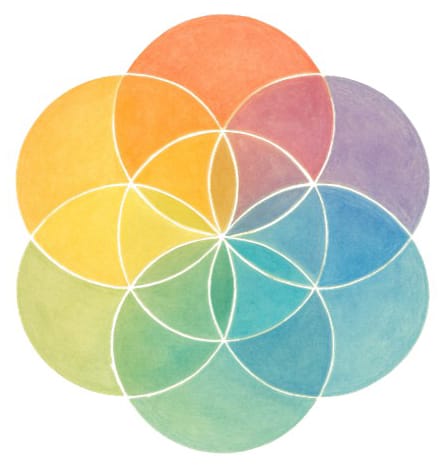
I dissented. I needed a map built for complexity and found the concept of emergence. Emergence refuses the teleological ladder entirely: no predetermined destination, no hierarchy of arrival. What I still needed was a visualization that could hold that complexity without hierarchy. As it turned out, humans had already created one thousands of years ago: the Seed of Life, a non-hierarchical flowering of becoming. In Emergent Dynamics, we replaced ‘Stages’ (where you are going) with Paradigms: responsive intelligences that surface based on conditions, not rank.
In this landscape, we root our work in Epistemic Sovereignty: every individual’s inherent right to be the final authority on their own reality, and the insistence that different worldviews intersect without crushing one another. In other words, where you are is a response to conditions, not a rank. When conditions change, so do you.
We are moving away from a world that asks, ‘Are you evolved enough to follow the rules?’ and toward one that asks, ‘What conditions are you responding to, and what do your colors see that mine cannot?’
The Palette — Foundations and Shadows
In Emergent Dynamics, we don’t look for ‘good’ or ‘bad’ people; we look for the composition of the room. We treat human worldviews like a painter’s palette with every color representing a specific intelligence, a necessary response to the world’s conditions.
When a system is healthy, these colors are Luminous. They overlap like watercolors, each remaining distinct while contributing to a coherent whole. But when a system is under stress, when it tries to force alignment through a collapse into a single worldview, the colors become Oversaturated.
The ‘Shadow’ of a color isn’t a flaw of character. It is an intelligence pushed too far, turned muddied and destructive.
Beige (Somatic & Survival): This is the Pulse, the body’s intelligence ensuring survival. Luminous Beige (healthy) is the sharp instinct of the survivor. When survival is threatened, Beige dissents or resists – the body’s knowledge that it isn’t safe can’t be argued away by policy, theorized by frameworks, or voted away by consensus. Oversaturated Beige is the perpetual tremor – a state of panic where long-term thinking becomes impossible and every moment feels like the last.
Red (Individual Agency, Power & Protection): This is the No, it’s the bone-deep ‘I am’ that must exist before any ‘We are’ can be built. Luminous Red is self-sovereignty and protective strength. When Red dissents, it is the sovereign self drawing a line that no institution, protocol, or consensus has the authority to cross. Oversaturated Red is an aggressive power used to dominate rather than shield.
Blue (Order & Honor): This is the Structure, the rhythm that creates shared meaning and safety through tradition. Luminous Blue is reliability and sacrifice. When Blue dissents, it is defending what it genuinely believes stands between the people it serves and chaos. Oversaturated Blue is rigidity, a cage of protocols that have forgotten the souls they were meant to serve.
Green (Community & Harmony): This is the Collective Heart. It seeks equality and shared humanity beyond a single tribe. Luminous Green is an empathetic connection, the radical inclusivity that makes space for every voice to be heard. When Green dissents, it is refusing to accept any solution that requires leaving someone behind. Oversaturated Green is Group Think, the cultural policing that enforces a flattened consensus to maintain a fragile and forced harmony.
Yellow (Systems & Clarity): This is the eye of the architect, the intelligence that maps the landscape from above. Luminous Yellow is systemic clarity, the ability to see how all colors fit together without needing them to be the same. Oversaturated Yellow is the detachment of analyzing a tragedy instead of feeling the human pulse at its center.
Orange (Strategy & Progress): This is the Drive, focused on winning, autonomy, and results. Luminous Orange is visionary momentum. Oversaturated Orange is exploitation, the pursuit of success at the cost of the collective.
The Dissent of the Saturated
Dissent emerges when the saturation becomes unbearable. It is the moment a person feels the shadow of a system trying to force their color to be something it isn’t.
I saw what happens when a system lacks a common map. On the Oakland Police Commission, the colors didn’t blend; they competed for dominance. Green activists tried to force a Group Heart consensus onto a Beige survival reality. Blue officers held to order while Orange elected officials moved toward the loudest frequency in the room for a win. Each paradigm saw the others’ refusal to conform as a failure of the Commission itself, rather than a natural collision of different truths.
The officer’s Blue rigidity, the activist’s Green demand for consensus, the community’s Beige tremor of survival – these aren’t just ‘behaviors,’ they are signals, the sound of Epistemic Sovereignty, distinct paradigms each defending the integrity of their own reality.
The foundational palette describes what is already present in any room. But when we hold these paradigms with intention, something new becomes possible – new colors emerge. Turquoise and Coral exist in the Spiral Dynamics lineage, but Burgundy and Verdigris emerged from the work itself. These new paradigms that have no name in any prior framework, instead they are the alchemies that arise when we refuse to let the system flatten us.
Turquoise sees the world as a single living organism, caring not just for the tribe but for the pulse of the entire planet. Coral refuses to collapse into a single identity; it is the paradigm of the ‘both/and,’ integrating light and shadow, the broken and the blooming. Together they provide the atmospheric conditions for what emerges next.
Burgundy (Red + Turquoise): This is Fierce Peace, the heart of my work on dissent. Burgundy occurs when the fire of Red agency meets the global care of Turquoise. It is nonviolence with teeth, protective fire that says ‘No’ on behalf of the collective. To design for dissent is to make a seat at the table for Burgundy.
Verdigris (Grieving Agency): This is Mourning-Movement, the color of weathered copper that has learned to breathe. Verdigris is the alchemy of Green grief meeting Burgundy’s fire, the sacred tears that let agency finally flow, turning righteous heat into a healing tide rather than a blast that turns us to ash. Our agency only becomes Verdigris when we stop suffocating our grief and let it breathe.
The Application: Designing for Dissent
When I brought the palette of Emergent Dynamics into a large Southern California school district, something unexpected happened. The room was full of educators and administrators, many of them exhausted and resistant to yet another initiative, but something shifted anyway. A hand went up; ‘I’m Blue all day,’ someone said, and they said it with pride, not apology. Others followed. Certain roles recognized that their entire function was Blue by design. Structure and order weren’t flaws or political positions, they were necessary intelligences the institution literally could not function without. And once people could stand in their Luminous Blue without shame, something else became possible – an honest conversation about what happens when Blue becomes oversaturated, when the cage of protocol forgets the souls it was meant to serve.
A school district is one kind of high-conflict multistakeholder environment, a police commission is another, and arguably the most volatile. Across the country, commissions face a collision between a rigid Blue that experiences reform as dishonor and an oversaturated Green that refuses any solution that doesn’t require Blue’s elimination. No shared map exists for that collision. I built Emergent Dynamics in response to what I witnessed in Oakland, and I know now what it would have made possible.
The first thing that changes is the question. A commissioner, facilitator, or chief who understands the Palette stops asking ‘how do we overcome this resistance?’ and starts asking ‘what conditions are producing this response?’ The officer who resists new training isn’t indifferent, he’s depleted; that’s not a discipline problem, that’s Beige and Beige doesn’t need a mandate; it needs safety.
The second thing that changes is the space, by the people in it. When every person can find themselves on the map without being ranked or pathologized, defensiveness drops. The Blue officer raises his hand. Order and structure become human needs rather than political positions. Care and community stop being the exclusive property of reform advocates and become intelligences that everyone in the room can recognize and respect. The colors stop competing for dominance and start becoming legible to each other.
The third thing that changes is who the room is for. Whoever holds the seat has always written policy. Emergent Dynamics insists on a different standard: radically inclusive sovereignty. If we understand Beige, we don’t need the traumatized community members present to write policy that honors their reality. The map carries them in. The people most impacted by policing, the ones who rarely hold a seat at any table, become present in every policy conversation through the intelligence their conditions represent.
When we design for compliance, the palette becomes muddled and gray. We lose the Blue of honor to rigidity and the Green of community to a flattening groupthink. But when we design for sovereignty, the palette remains Luminous. Dissent stops being a threat to the process and becomes the most important signal in the room. We stop asking ‘how do we make everyone agree?’ and start asking ‘how do we create the conditions where every paradigm can breathe?’
This is the call. To the designer who builds systems people have to survive. To the leader who mistakes silence for agreement. To the commissioner who knows something is broken but can’t name what. Return to the body. Listen for the ‘no’ that forms in the throat before the mind can explain it. Dissent is not a threat to our alignment; it is the heartbeat of our alignment. It is the only thing that keeps the soul of the system intact.
Eula Mae Love never sat at a policy table, but I like to think she would have wanted exactly this: a solution that offers justice to her without requiring the erasure of anyone else’s humanity. She is the reason this map exists.
References
- Beck, Don Edward, and Christopher C. Cowan. Spiral Dynamics: Mastering Values, Leadership and Change. Malden, MA: Blackwell Business, 1996.
- Benjamin, Walter. ‘Theses on the Philosophy of History.’ In Illuminations: Essays and Reflections, edited by Hannah Arendt, translated by Harry Zohn, 253–264. New York: Schocken Books, 1968.
- Singleton, T. D. ‘Facing Jazz, Facing Trauma: Modern Trauma and the Jazz Archive.’ PhD diss., University of California, Berkeley, 2011. https://escholarship.org/uc/item/79v6m6c0.
- Wittgenstein, Ludwig. Philosophical Investigations. Translated by G.E.M. Anscombe. Oxford: Blackwell, 1953.