
Field Report
Post-Occupancy Evaluations as a Design Tool
May 13, 2026
Scott Edwards Architecture | Portland, OR
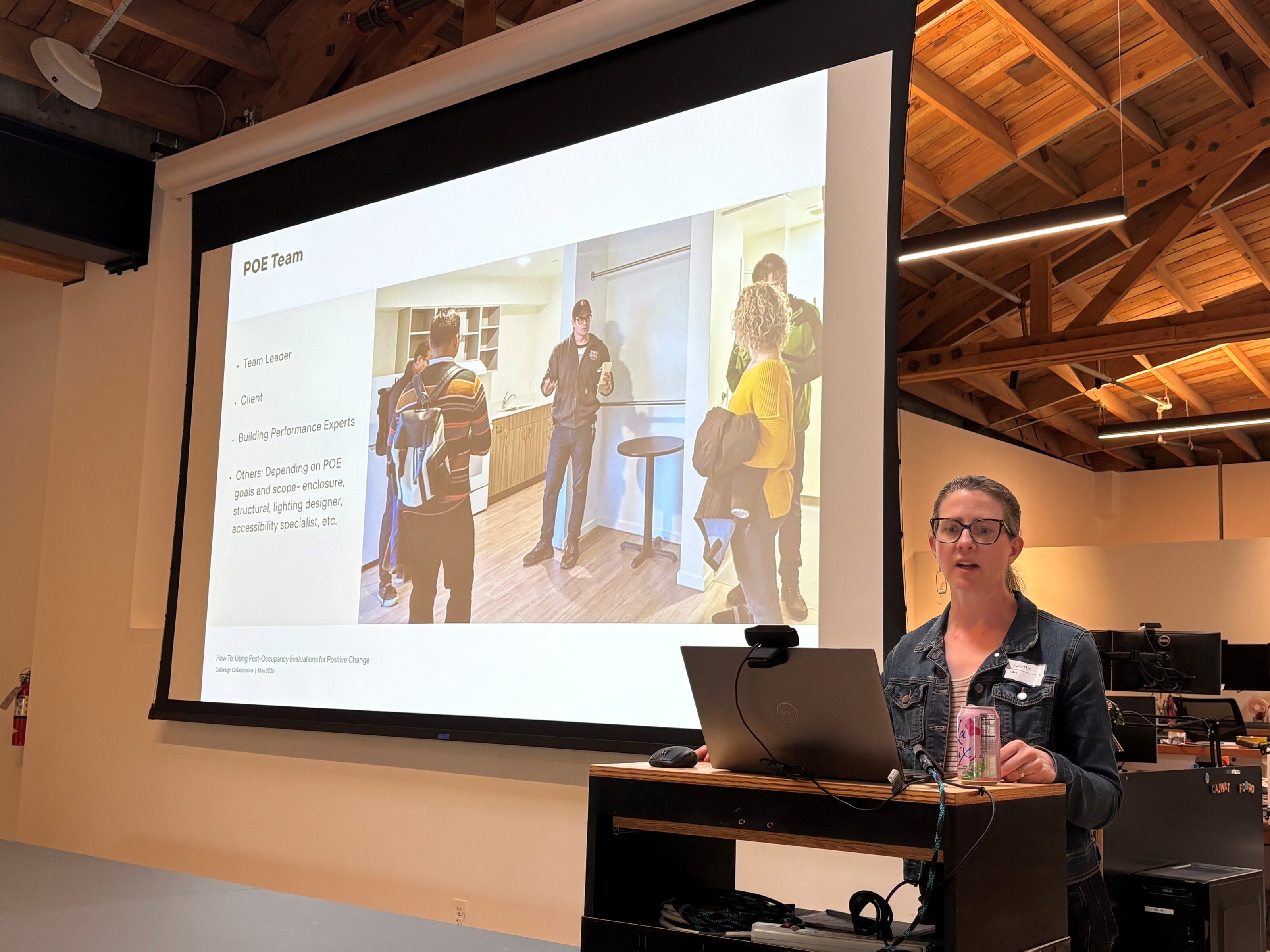
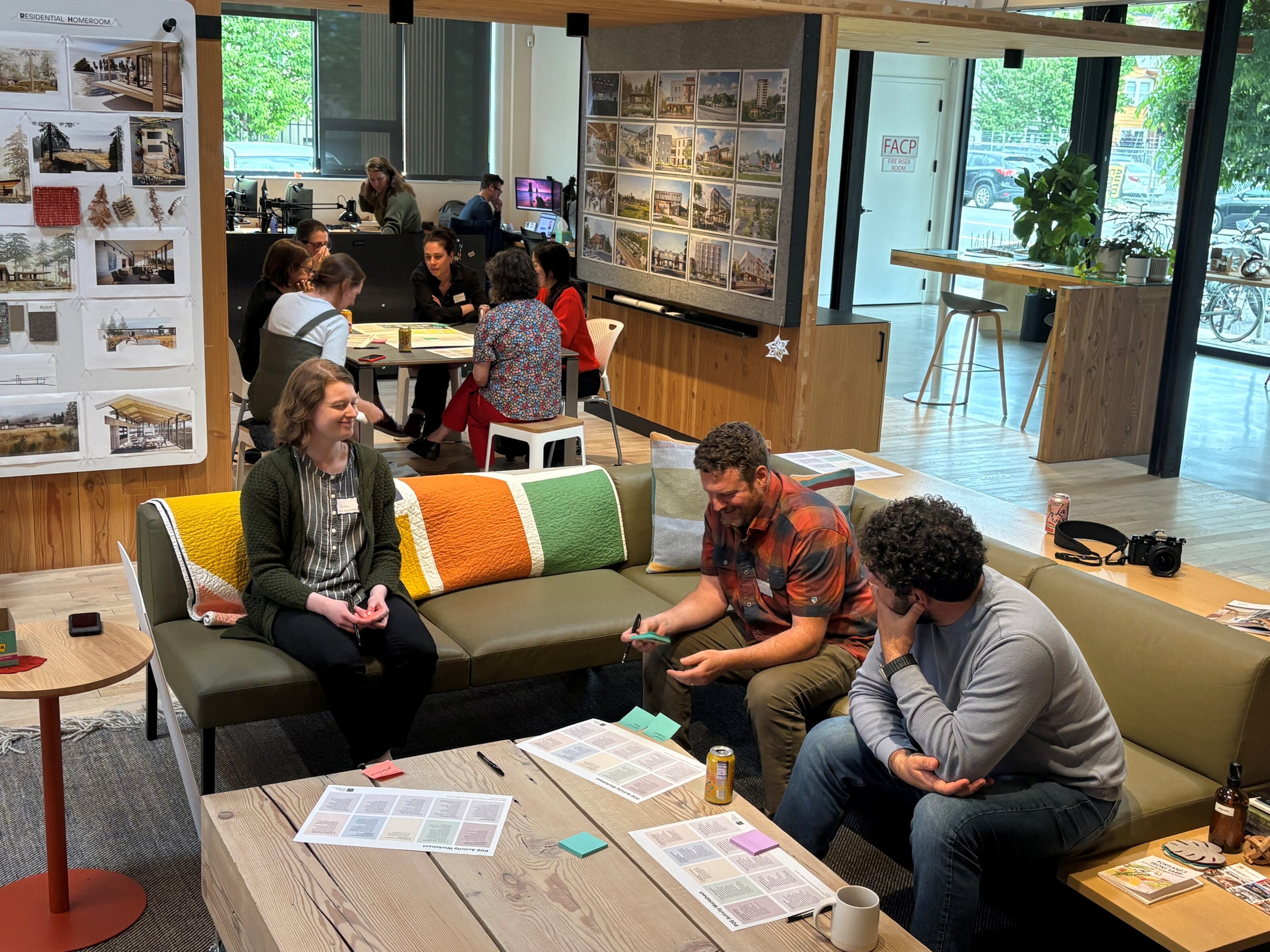
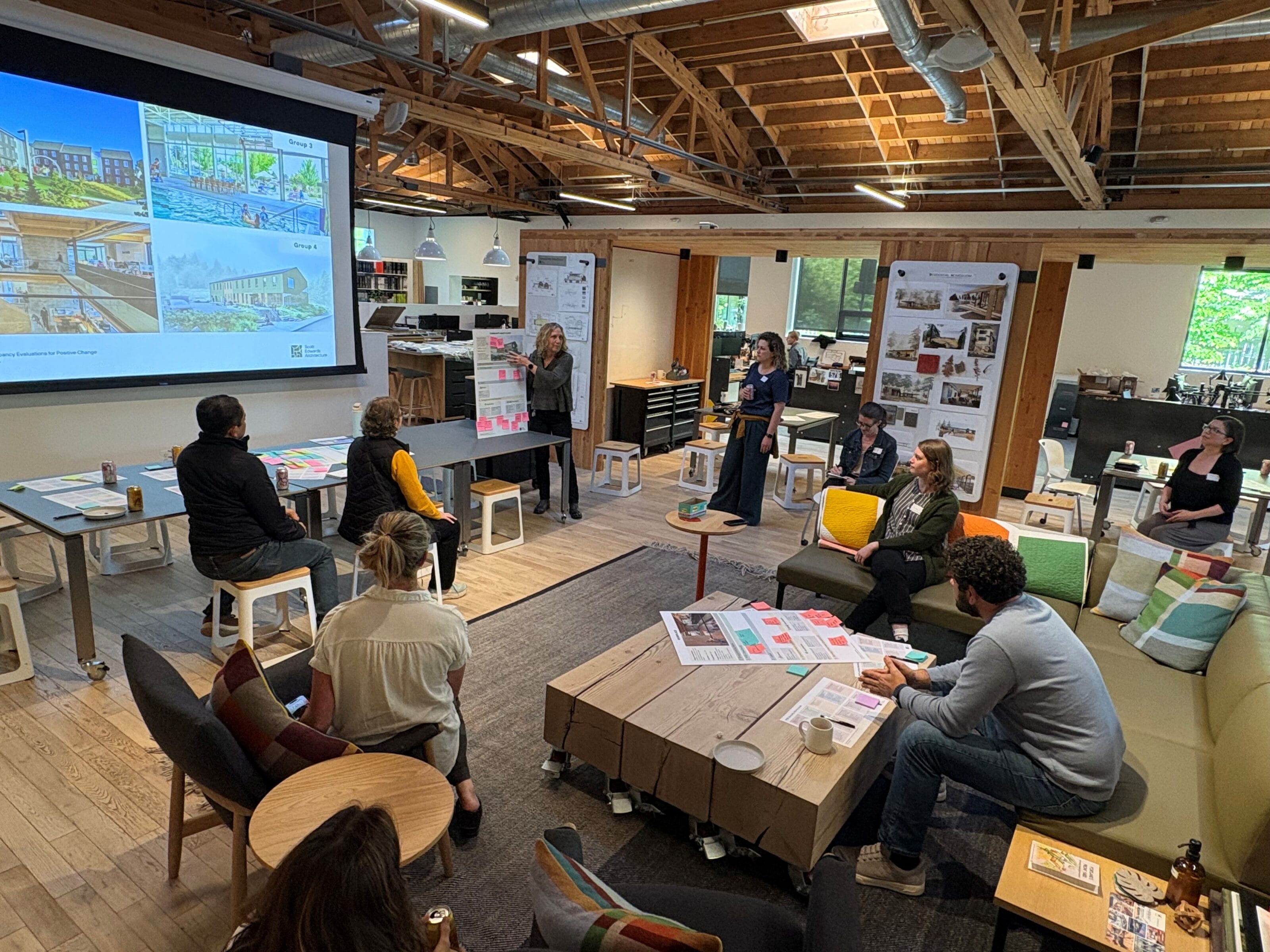
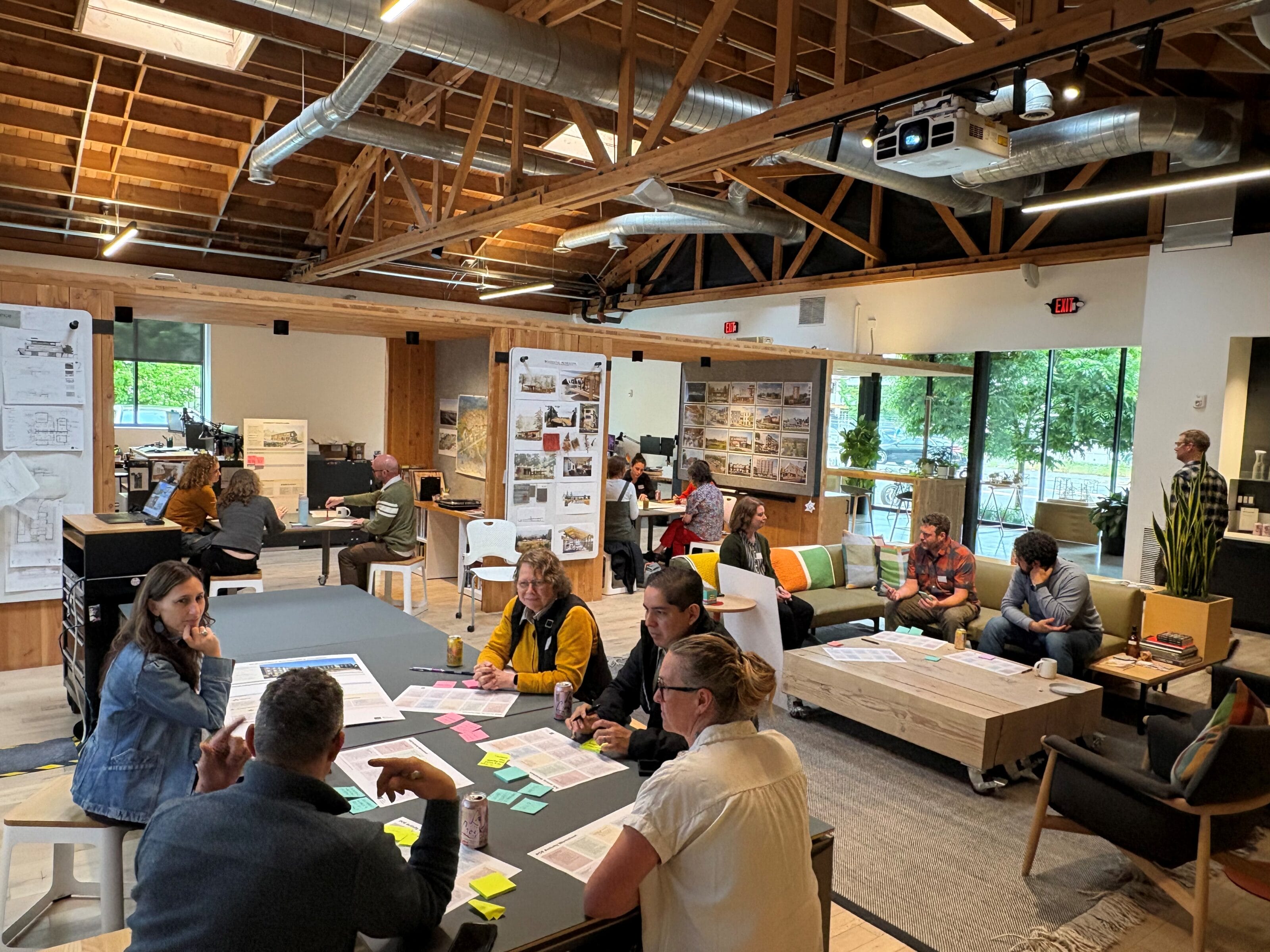
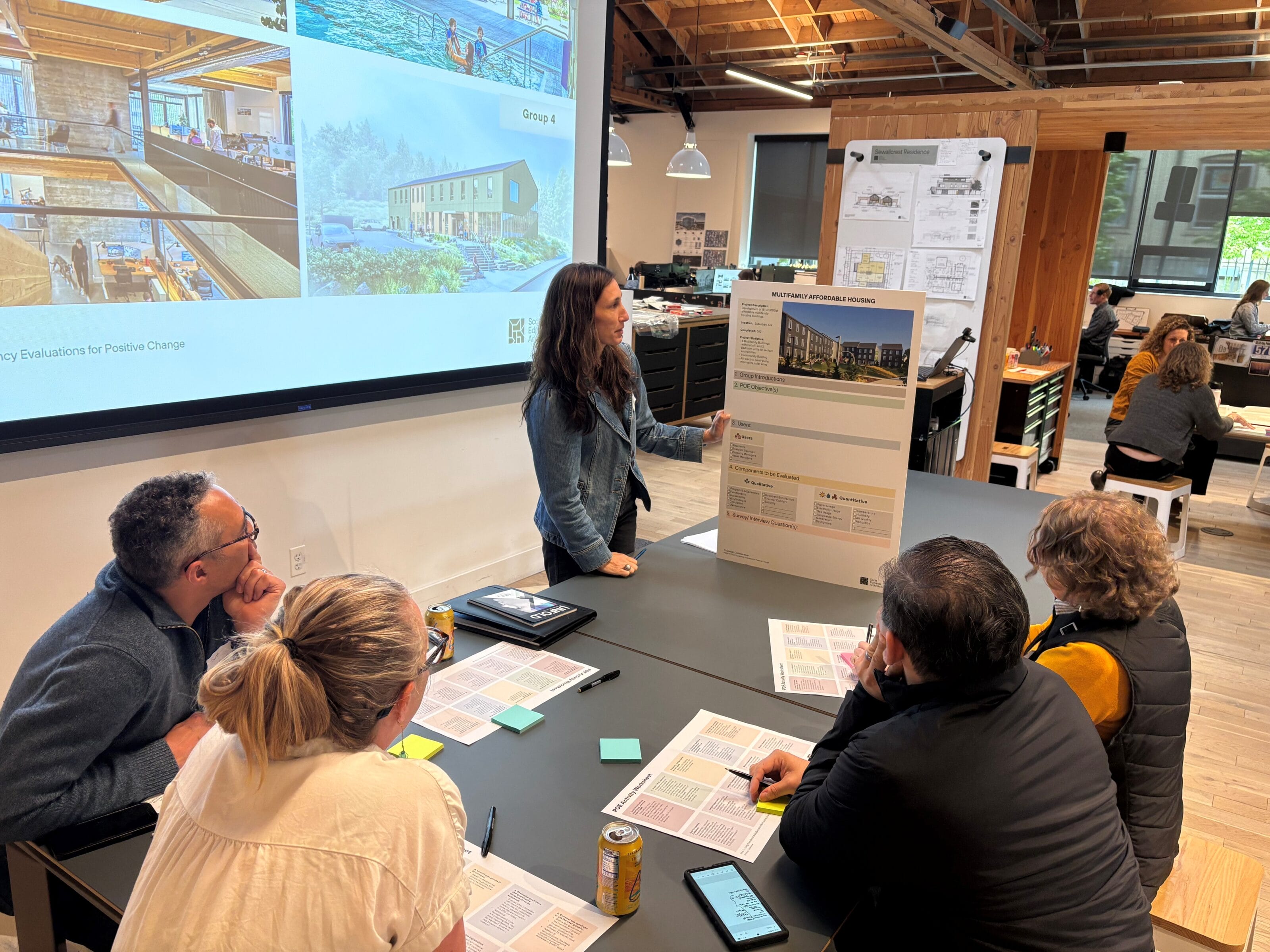
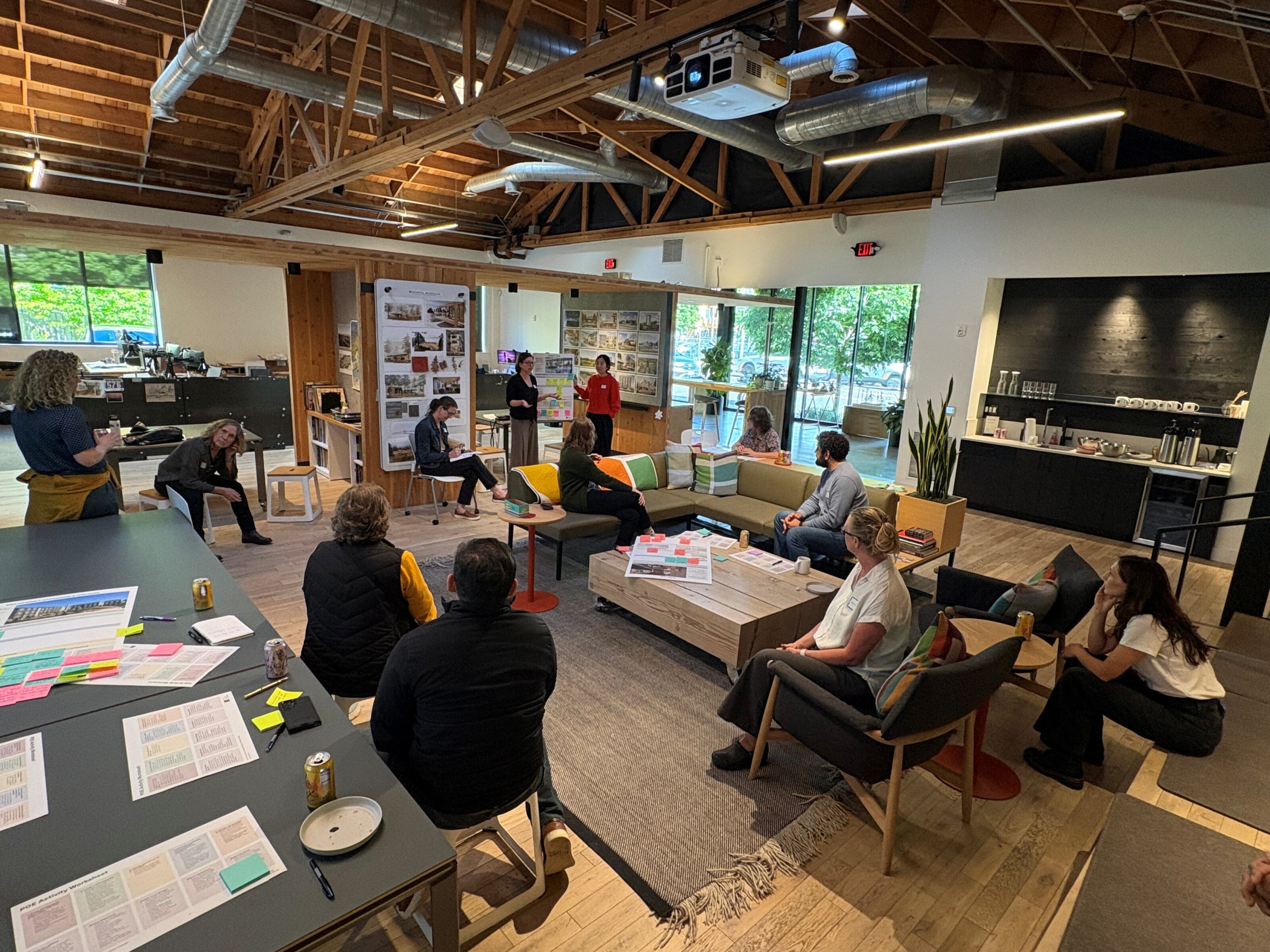
At a recent CoDesign Collaborative workshop hosted and presented by Scott Edwards Architecture (SEA), participants explored how post-occupancy evaluations (POEs) can serve as a powerful tool for learning, relationship-building, and continuous improvement in design practice.
While POEs are often associated with architecture and the performance of completed buildings, Scott Edwards Architecture framed them as something broader: a structured way to gather meaningful user feedback after a design has been put into use. For the SEA team, POEs help strengthen long-term relationships with clients, uncover opportunities for improvements to completed projects, and most importantly, create a feedback loop that informs future projects, including site and building design and material and equipment selection, all in support of sound design decision-making.
The workshop, led by five women from the SEA team and attended by 25 designers, walked participants through the firm’s POE development process, beginning with a simple but essential question: What is the purpose of the evaluation? Defining the objective helps clarify what the team hopes to learn, whether validating original project goals, understanding occupant comfort, identifying maintenance issues, or measuring how well a design performs in practice. Next, the process moves to identifying the relevant user groups. The POE scope could be limited to one group, for example the residents of a housing project, or expanded to include other key stakeholders like property managers or maintenance staff. From there, the process focuses on determining both qualitative and quantitative metrics to be evaluated and developing thoughtful questions that generate useful insight rather than simple yes-or-no responses.
A key takeaway was the importance of intentional survey design. The facilitators from the SEA team emphasized asking broader, open-ended questions that invite reflection and experience-based feedback. Just as important was respecting participants’ time: surveys should be focused, concise, and ideally limited to no more than two pages to encourage completion and improve the quality of responses. Providing incentives, like gift cards or giveaways, is a great way to show appreciation for participants’ time and valuable feedback while boosting participation.
Although rooted in architectural POEs, the workshop highlighted a process that feels highly transferable across design disciplines. Whether evaluating how people interact with furniture, apparel, products, graphics, or service systems, the same principles apply: define the purpose, identify the right users, gather both measurable and experiential feedback, and use that information to improve future design outcomes.
At its core, the session reinforced a simple but valuable idea: design does not end when something is delivered. Learning from how people actually experience and use what we create may be one of the most effective ways to make future designs more responsive, resilient, and meaningful.
Special thanks to Scott Edwards Architecture, Juliette Grummon-Beale, Alexa Cano, Eugenia Fama-Higgins, Hayley Purdy, Andra Zerbe, and Alexi Meuwissen for their time and collaboration in making this workshop possible. We are grateful to grow our community through partnerships with individuals and firms centering social impact in design.
If you are interested in partnering with the CoDesign Collaborative community on a workshop in your space, send us a note at info@codesigncollaborative.org. We look forward to collaborating with you!
—
Alan Scott, FAIA, LEED FELLOW, LEED AP, CEM, WELL AP
Director of Sustainability, Building Science Solutions, Intertek
Board Member, CoDesign Collaborative