
Field Report
Exploring Innovation at the Autodesk Technology Center in Boston

Friday, August 9th, 2024
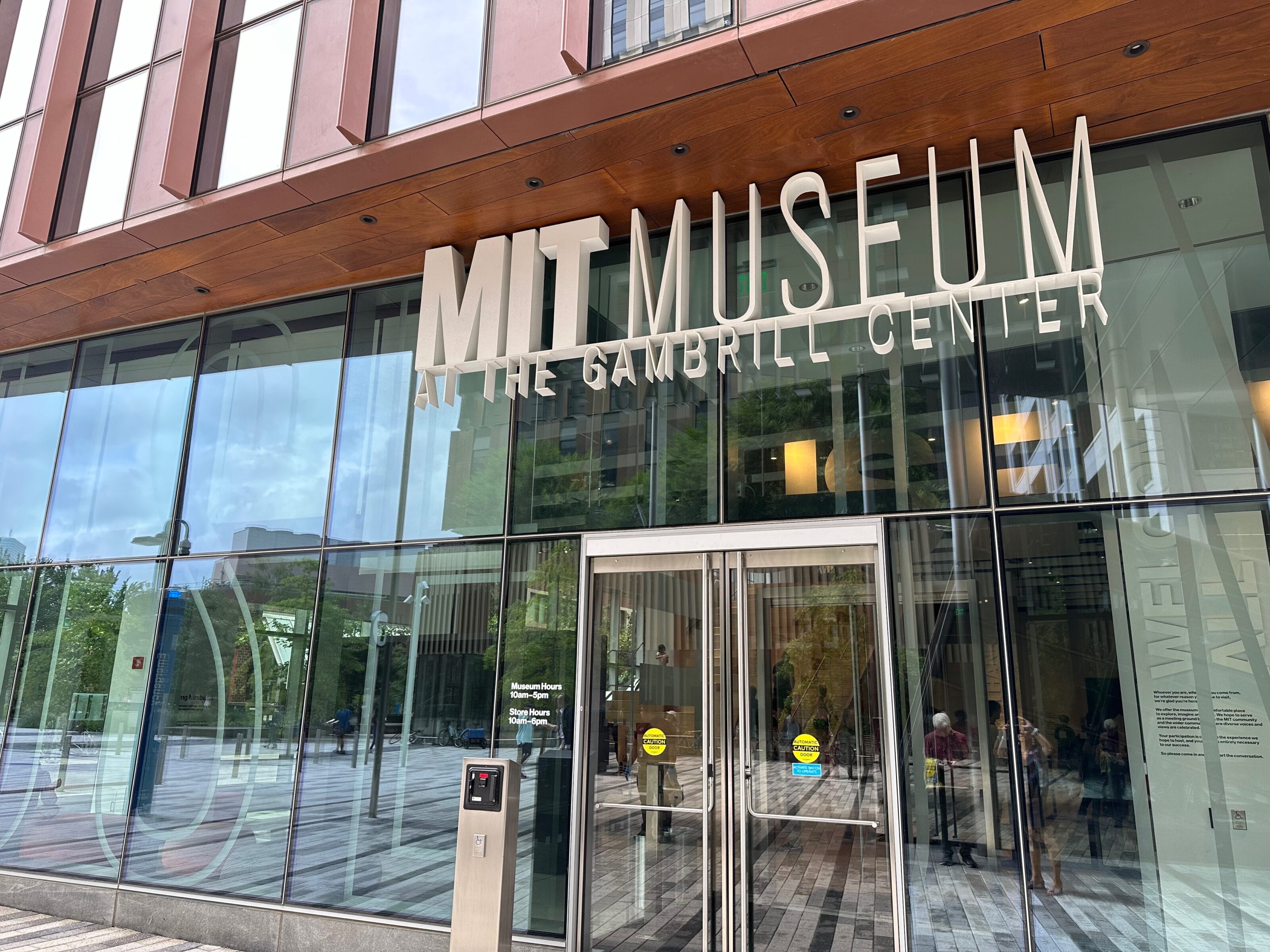
MIT Museum, Cambridge MA
The MIT Museum, located at the Massachusetts Institute of Technology in Cambridge, Massachusetts, is a hub of science and technology that showcases technology-related artworks, artificial intelligence, architecture, robotics, and the history of MIT itself. Visitors can explore the Institute’s innovations in science, technology, engineering, arts, and math (STEAM) through interactive exhibits, hands-on learning labs, and maker spaces.
Defining AI
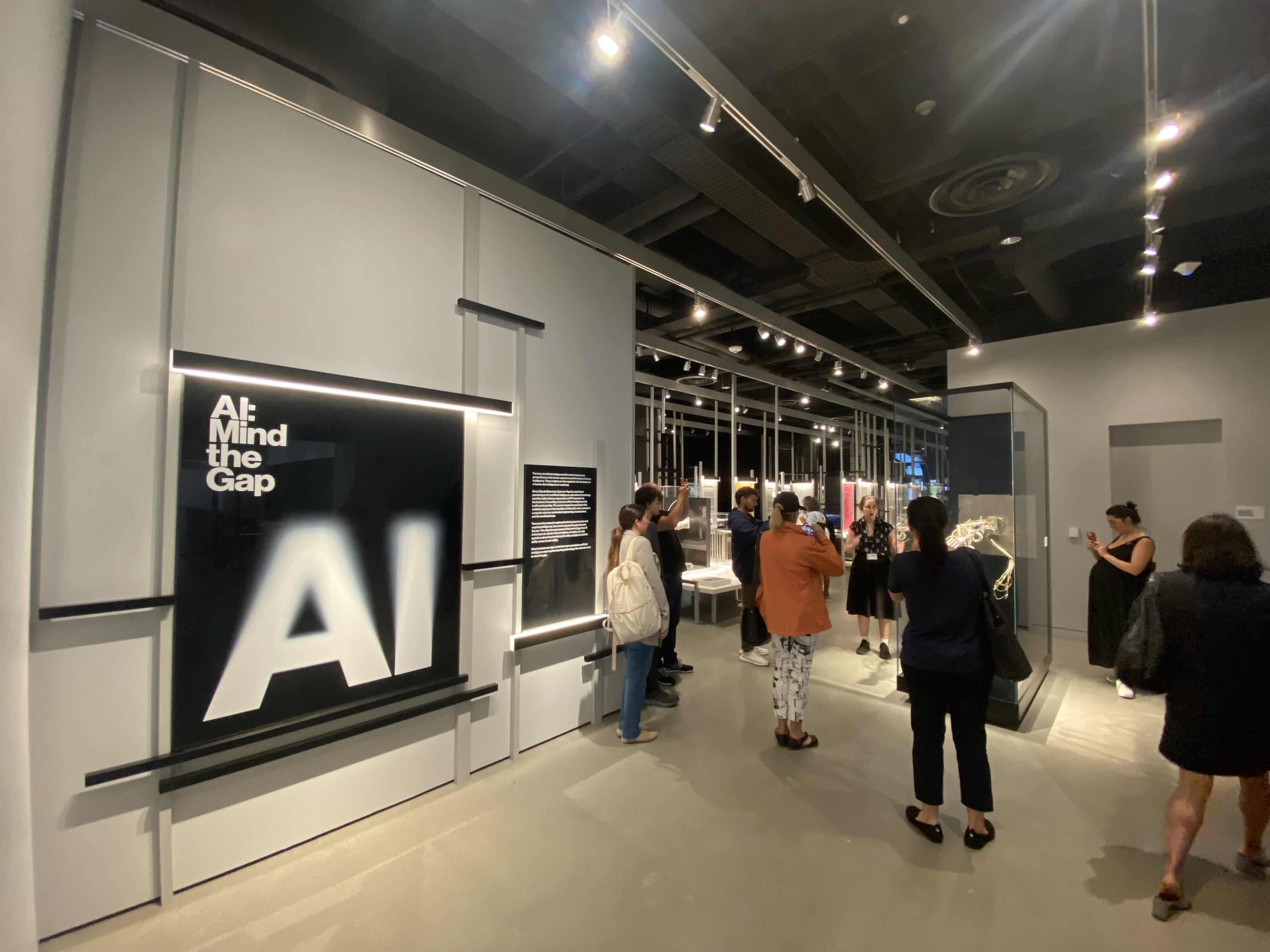
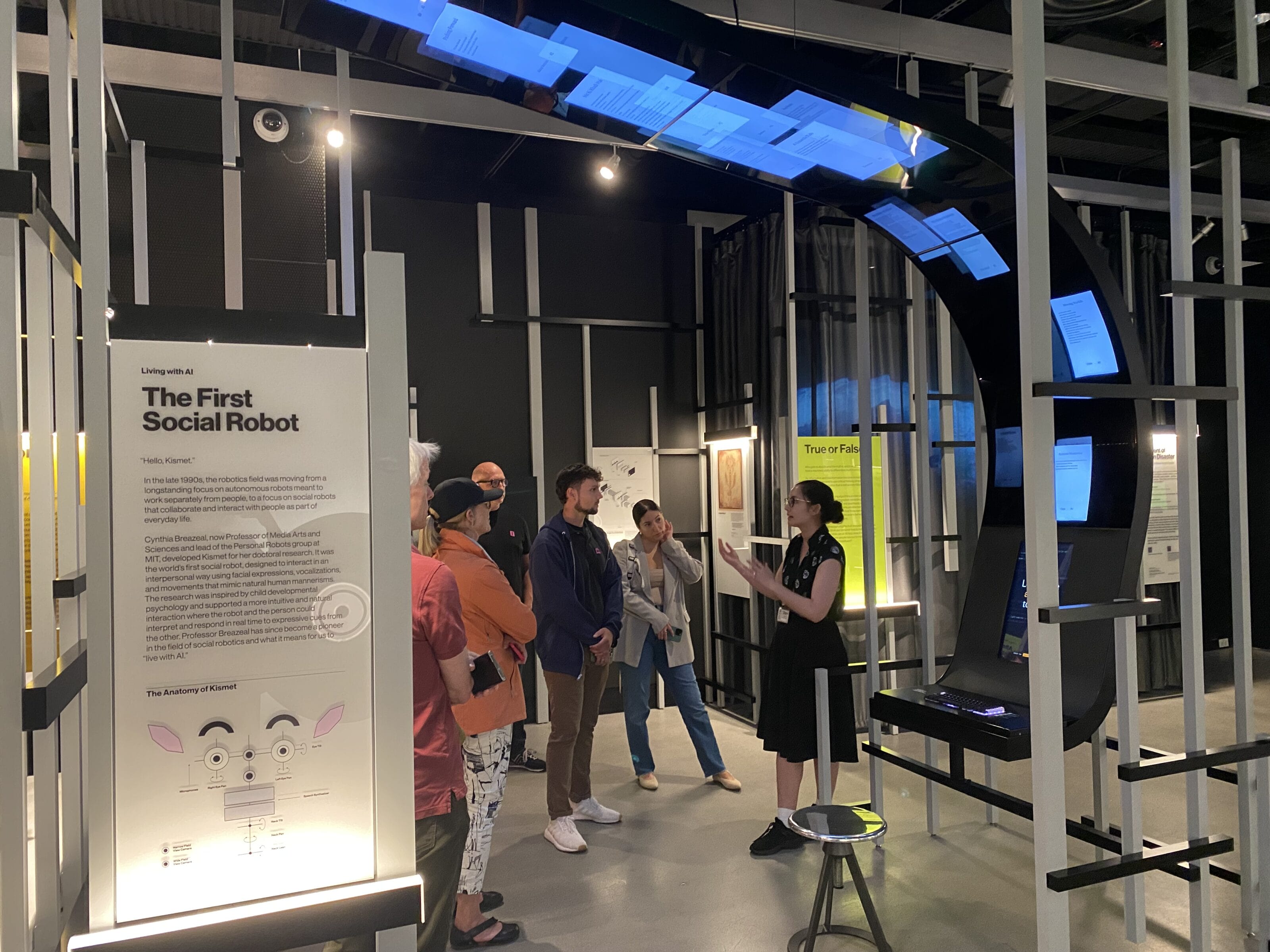
Our cohort, led by our MIT guide, Dora, explored the “AI: Mind The Gap” exhibit. We started by defining artificial intelligence as a group: what applications show up in our work or in our daily routines? Then, we considered AI as a teammate. What kind of teammate would we want to work with? Perhaps someone reliable, collaborative, friendly, and smart. Dora shared that AI is essentially really good pattern recognition. The “intelligence” of an AI teammate
depends on the quality and quantity of the data provided by humans.
Historical Robots
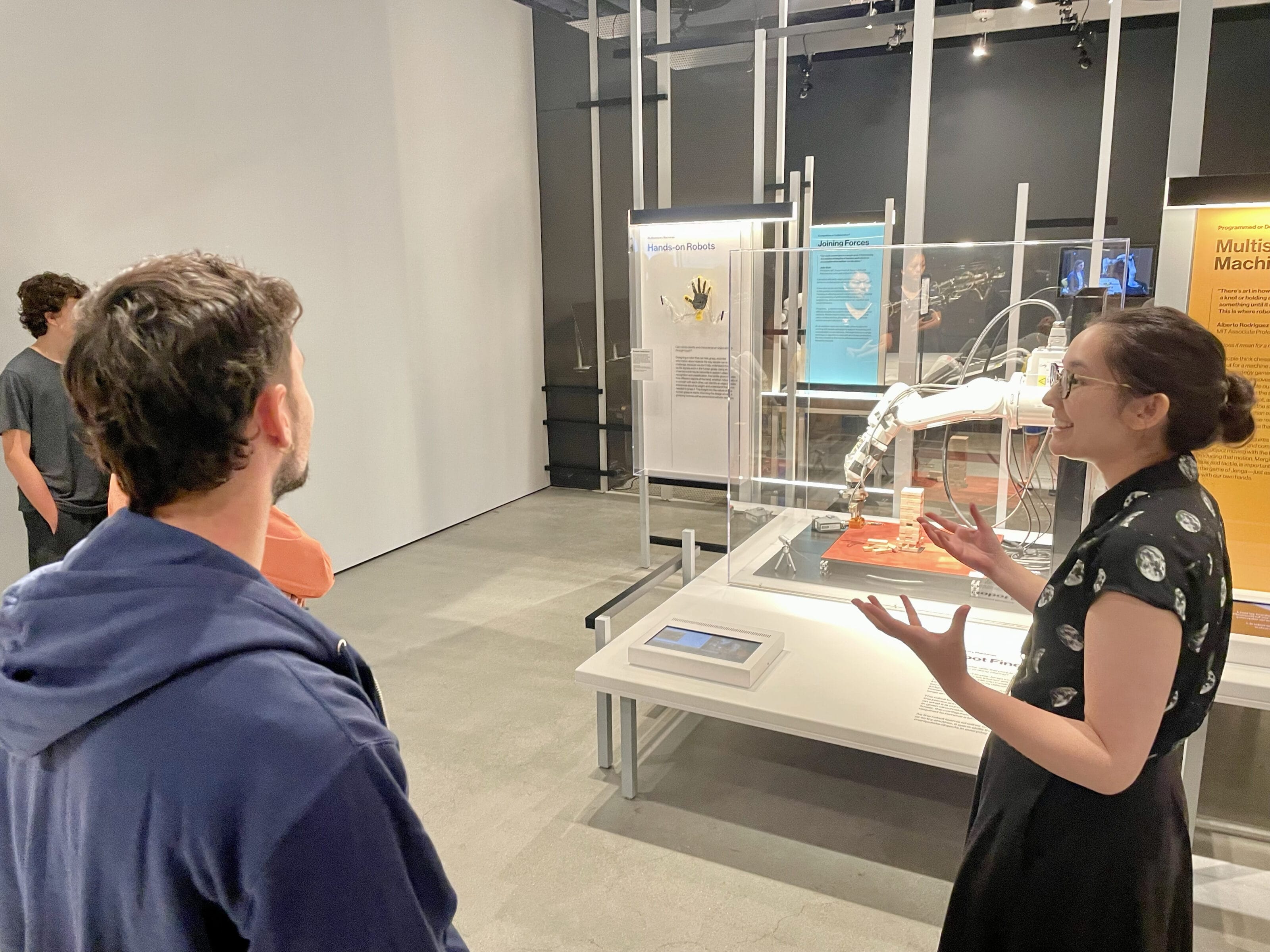
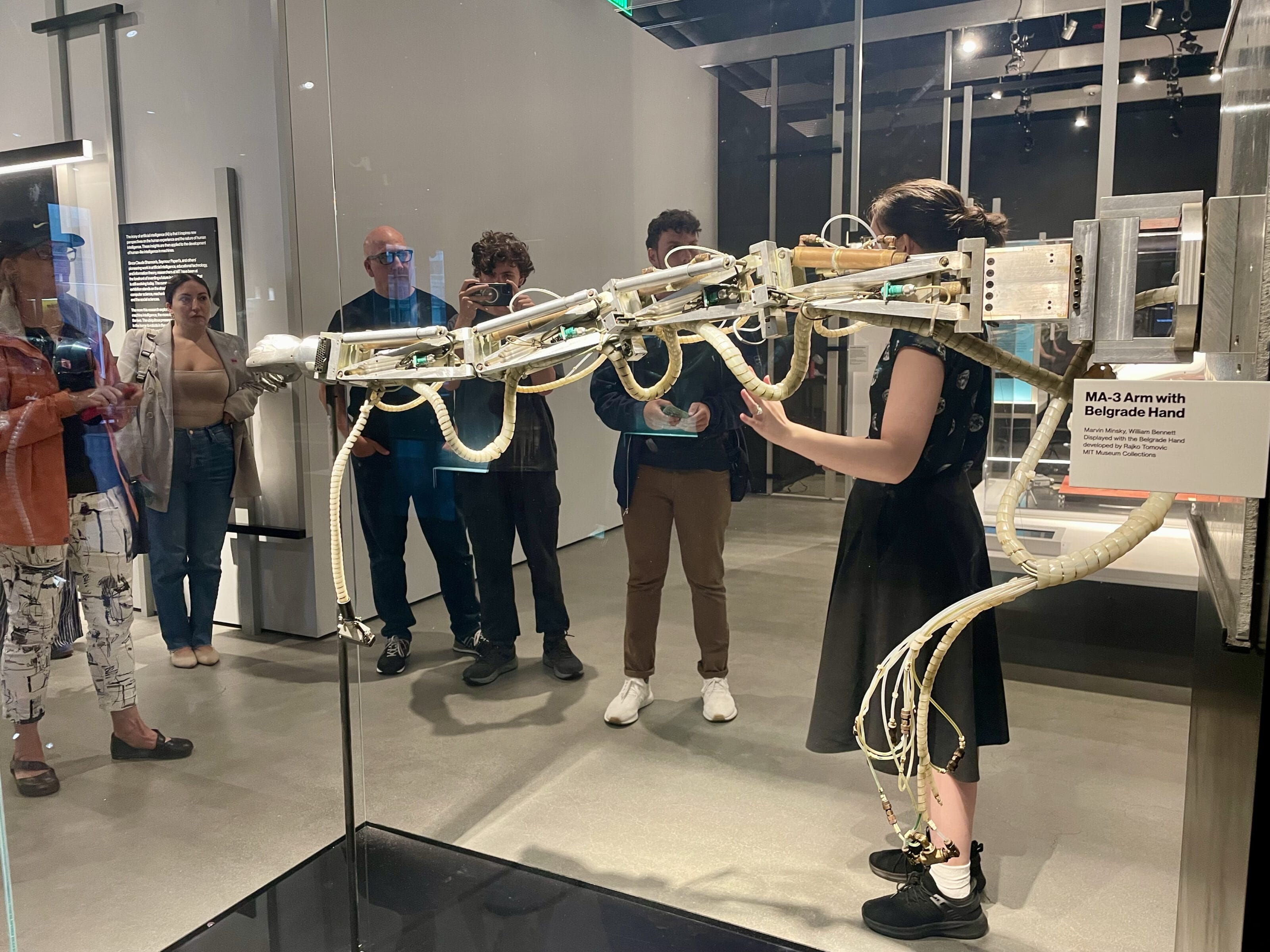
At the front of the exhibit, we were greeted by several AI robots. Some early examples were robotic arms that could mimic human movements. One robot arm uses tactile “poking” and an external camera to play Jenga. The robot learns over time when moves are successful, or the tower falls.
Invented by Dr. Cynthia Breazeal, an associate professor of Media Arts and Sciences at MIT, Kizmet is a robot head used to experiment in a[ective computing: machines recognizing and mimicking human emotions. Kizmet can move its eyes, ears, eyebrows, lips, jaws, and head using auditory and visual data when interacting with a human.
The museum has several friendly robots, aka Jibo, discontinued in 2019. Also invented by robotics pioneer Dr. Cynthia Breazeal, Jibo is known as the world’s first social robot for the home. It’s an interactive device that can sense, respond, and learn from its interactions with humans. Jibo can take photos and videos, assist with tasks and reminders, entertain, educate, and even connect with other devices and people. Jibo’s design is friendly and approachable, often described as having a personality that’s charming and engaging.
Deep Fakes
The museum has an interactive game for attendees to try and detect real videos from AI-generated videos, otherwise known as “deep fakes.” A deepfake is a synthetic media creation that uses artificial intelligence and machine learning techniques, such as deep learning, to make images, audio, and video appear real. The term “deepfake” is a blend of “deep learning” and “fake.” We learned to pay attention to jaw shadows, arm movements, and audio matching mouth movements to determine real vs. fake.
Emotion detection
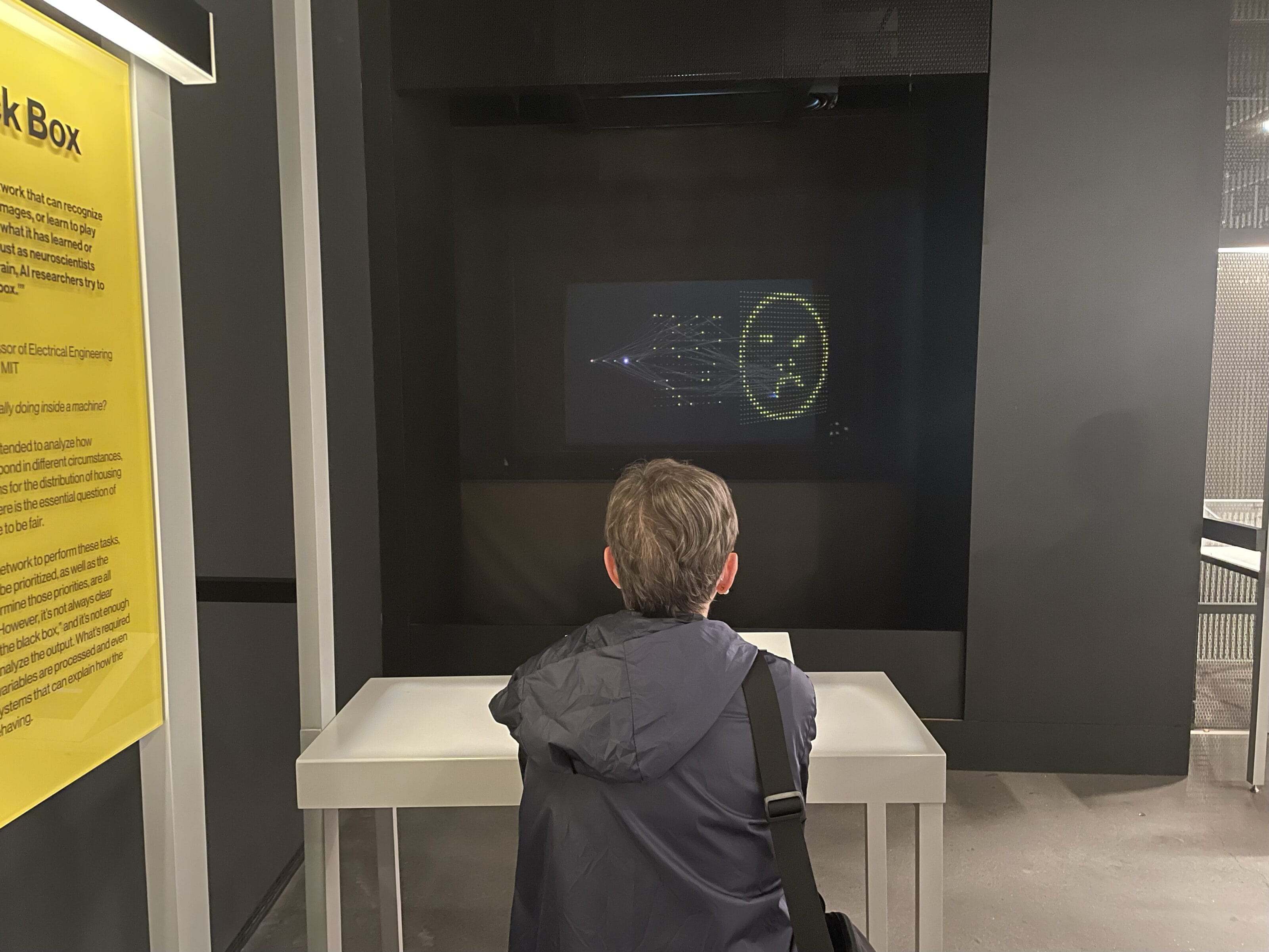
An AI model at the museum was trained to discern the emotion of a simple face drawing created by museum guests. The model has 5 emotion options and uses layers of data analysis and math equations to choose the closest fit, with varying degrees of confidence. A visualization using projections and screens shows some of the translation process
between pixels, digits, and equations.
Unmasking AI
Computer scientist Joy Buolamwini was a graduate student at MIT when she discovered AI facial recognition couldn’t detect her dark skin but would register her as a human when she put on a white mask. This is the result of biased data sets, where models are trained on a majority of white, male faces. This portion of the exhibit explains the many dangerous implications, including falsely arresting dark-skinned people as a result of faulty facial
recognition technology.
After our time in the AI exhibit, we took time to independently explore the other areas of the museum and reflect on what we had learned – from friendly robots to emotion detection, biased data and deep fakes, there is a lot to dig into. Many of us walked away with a new appreciation for the scientists developing this technology, as well as the ethics and safety boundaries to be mindful of.
Stay tuned for more insights and updates from CoDesign Collaborative’s explorations in the world of emerging technologies! The Autodesk Technology Center Tour was organized as a Field Trip, CoDesign Collaborative’s intimate, design-curious explorations in Boston, MA, Portland, OR and the Bay Area.
If you have a recommendation for a Field Trip or are interested in hosting the CoDesign Collaborative community in your space, send us a note at info@codesigncollaborative.org. We look forward to collaborating with you!
—
Catherine Clarke
UX Designer, Fidelity Center for Applied Tech & Board Member
CoDesign Collaborative